
Many-particle quantum transport between finite reservoirs
Abstract: We focus on the problem of (non-interacting) many-particle quantum transport across a lattice locally connected to two finite, nonstationary reservoirs. Typically, one is interested in the current developing through the microscopic channel connecting the two much larger reservoirs, which are often considered stationary. However, the directed particle flow induced by the reservoirs' bias yields a slow redistribution of particles, which consequently generates a non-negligible change in the macroscopic quantities defining the reservoirs. This observation, also addressed in recent experiments with ultracold atoms, is a direct consequence of the finite number of particles that one feeds, initially, in the quantum transport setup. We strive to build a theoretical formalism, using and expanding the framework of open quantum system theory, to describe this phenomenon and analyse its consequences on the many-body dynamics of a 1D lattice connected to two particle reservoirs.
Projection operator techniques have been frequently adopted to analyse the quantum dynamics of an open system interacting with a reservoir, with the premise that the latter remains stationary and, typically, in a grand canonical thermal state. However, in need to describe the possible evolution of the reservoirs, we adopt time dependent projectors to obtain generalized linear master equations for the reduced dynamics of the open quantum systems, incorporating the possible environmental evolution, assumed to evolve between grand canonical thermal states with changing parameters, e.g. chemical potentials. This novel analysis unveils the dependence of the explicit form of the perturbative expansion in the interaction Hamiltonian, of the generated (Nakajima-Zwanzig or time-convolutionless) master equations, on the physical mechanism which causes the change of the reservoir state. Two main scenarios are distinguished and analysed: the reservoir changes i) due to the interaction with the open system ---as in the quantum transport setup---, or ii) because of an external coherent driving. The developed theoretical framework is then applied to the quantum transport problem and it is shown how, in the Born-Markov approximation, the non-stationarity of the reservoirs manifest itself via time dependent rates in the Lindblad master equation for the 1D lattice, which models the intermediate channel.
Moreover, to achieve a more faithful description of the quantum transport problem, we impose further conditions on the particle exchange between the central lattice and the reservoirs, amending the already innovative description generated via time dependent projectors, to ensure the conservation of the total number of particles in the composite system. The additional requirements lead to a non-linear set of equations, formed by the master equation for the lattice degrees of freedom and two classical rate equations for the reservoirs' dynamics. The numerical simulations and analytical manipulations of such equations reveal the existence of different dynamical regimes: a short time regime, in which the evolution of the lattice is similar to the one generated by seemingly unaltered reservoirs, and a long time regime, accommodating the equilibration process describing the particle redistribution between the reservoirs and the lattice, until the reaching of a final equilibrium condition. We call the latter regime metastable, since the open system is almost in a stable condition, which, nonetheless, progressively changes with the continuous variation of the reservoirs.
Our analysis holds for bosonic, fermionic and fully distinguishable particles and no clear-cut differences between these cases are observed when focusing on the evolution of single particle observables, due to the absence of inter-particle interactions. However, two particle observables unveil the underlying many-particle interference effects and, exploring these, we characterize the impact of the particle nature on the quantum transport. Finally, the Gaussianity preserving character of the generator of the lattice dynamics is elaborated. This feature is exploited, on the one hand, to reconstruct the full many-particle dynamics via knowledge of only single particle observables, for the case of an initial Gaussian state, and, on the other hand, to formulate robust witnesses of the particle nature, which rely on the values of on-site populations and their variances at metastability
- Standort
-
Deutsche Nationalbibliothek Frankfurt am Main
- Umfang
-
Online-Ressource
- Sprache
-
Englisch
- Anmerkungen
-
Universität Freiburg, Dissertation, 2021
- Schlagwort
-
Reservoirs
Transportation
Quantenoptik
Dissipatives Quantensystem
- Ereignis
-
Veröffentlichung
- (wo)
-
Freiburg
- (wer)
-
Universität
- (wann)
-
2022
- Urheber
- Beteiligte Personen und Organisationen
- DOI
-
10.6094/UNIFR/226469
- URN
-
urn:nbn:de:bsz:25-freidok-2264697
- Rechteinformation
-
Open Access; Der Zugriff auf das Objekt ist unbeschränkt möglich.
- Letzte Aktualisierung
-
15.08.2025, 07:33 MESZ
Datenpartner
Deutsche Nationalbibliothek. Bei Fragen zum Objekt wenden Sie sich bitte an den Datenpartner.
Beteiligte
Entstanden
- 2022
Ähnliche Objekte (12)

Walter, Michael
Druckwechseladsorption als Wasserstoffreinigungsverfahren für Brennstoffzellen-Systeme im kleinen Leistungsbereich
Der Selektivschutz nach dem Widerstandsprinzip
Walter, Michael
Die Verwendung von 29G-Quincke-Spinalkanülen als Strategie zur Reduktion der Inzidenz des postspinalen Kopfschmerzes beim spinalen Sattelblock
Walter, Michael
Resozialisierung durch darstellendes Spiel in der Vollzugsanstalt
Untersuchungen über die Transport- und Lagerfähigkeit von Gonokokken und über die zelluläre Immunantwort des Menschen auf Gonorrhoe
Nachlass Michael Walter, Pädagoge, Heimatkundler, Regierungsdirektor (1876-1958) (Bestand)
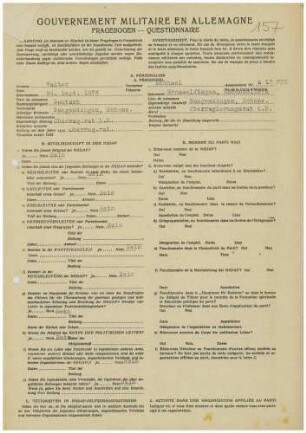
Walter, Michael
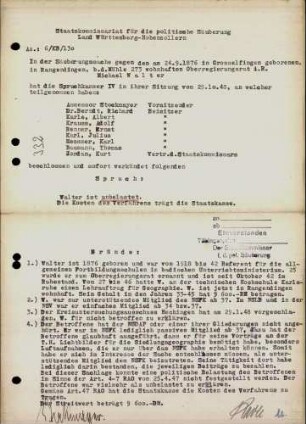
Walter, Michael
Photo(doppel)ionisation von Helium und einfachen Molekülen
Walter, Michael
Druckwechseladsorption als Wasserstoffreinigungsverfahren für Brennstoffzellen-Systeme im kleinen Leistungsbereich
Der Selektivschutz nach dem Widerstandsprinzip
Walter, Michael
Die Verwendung von 29G-Quincke-Spinalkanülen als Strategie zur Reduktion der Inzidenz des postspinalen Kopfschmerzes beim spinalen Sattelblock
Walter, Michael
Resozialisierung durch darstellendes Spiel in der Vollzugsanstalt
Untersuchungen über die Transport- und Lagerfähigkeit von Gonokokken und über die zelluläre Immunantwort des Menschen auf Gonorrhoe
Nachlass Michael Walter, Pädagoge, Heimatkundler, Regierungsdirektor (1876-1958) (Bestand)
Walter, Michael
Walter, Michael
Photo(doppel)ionisation von Helium und einfachen Molekülen
Walter, Michael
Druckwechseladsorption als Wasserstoffreinigungsverfahren für Brennstoffzellen-Systeme im kleinen Leistungsbereich
Der Selektivschutz nach dem Widerstandsprinzip
Walter, Michael
Die Verwendung von 29G-Quincke-Spinalkanülen als Strategie zur Reduktion der Inzidenz des postspinalen Kopfschmerzes beim spinalen Sattelblock
Walter, Michael
Resozialisierung durch darstellendes Spiel in der Vollzugsanstalt
Untersuchungen über die Transport- und Lagerfähigkeit von Gonokokken und über die zelluläre Immunantwort des Menschen auf Gonorrhoe
Nachlass Michael Walter, Pädagoge, Heimatkundler, Regierungsdirektor (1876-1958) (Bestand)
Walter, Michael
Walter, Michael