
Defendre la paix de la cite: Marsile de Padoue et le probleme du consentement politique au XIVe siecle
Abstract: The article analyses the issue of political consent in Marsilius of Padua's treaty Defensor Pacis, in the context of his perspective on the relationship between state and church. Researchers have always shown significant interested in the political writings of Marsilius. This contribution is less interested in evaluating the different interpretative theories on his writings, its aim being to investigate the main concepts of Marsilius' political vocabulary inherited from Aristotle much too often used with very different meanings. His ideas about consent cannot be understood unless Marsilius's attitude towards the law is not clarified, as one can see in chapter XII of the first part of the treaty Defensor Pacis. In order to refer to consent, he uses here an expression equivalent to the Roman law maxim "quod omnes tangit ab omnibus tractari et approbari debet". The analyses of the first dictio of Defensor Pacis is also revealing for two cases of false consent: in cases when consent do
- Alternative title
-
Marsilius of Padua or the pacifying power: popular consent and divine will in the 14th century
- Location
-
Deutsche Nationalbibliothek Frankfurt am Main
- Extent
-
Online-Ressource
- Language
-
Französisch
- Notes
-
Veröffentlichungsversion
begutachtet (peer reviewed)
In: Studia Politica: Romanian Political Science Review ; 7 (2007) 1 ; 157-184
- Classification
-
Geschichte
Politik
- Event
-
Veröffentlichung
- (where)
-
Mannheim
- (when)
-
2007
- Creator
-
Tătaru-Cazaban, Miruna-Irina
- URN
-
urn:nbn:de:0168-ssoar-56063-3
- Rights
-
Open Access; Open Access; Der Zugriff auf das Objekt ist unbeschränkt möglich.
- Last update
-
15.08.2025, 7:21 AM CEST
Data provider
Deutsche Nationalbibliothek. If you have any questions about the object, please contact the data provider.
Associated
- Tătaru-Cazaban, Miruna-Irina
Time of origin
- 2007
Other Objects (12)

Defendre la paix de la cite: Marsile de Padoue et le probleme du consentement politique au XIVe siecle

De la politique linguistique à la politique, quelle place du chercheur dans la cité?

Histoire politique de la monarchie pontificale au XIVe siècle, ou la papauté à Avignon
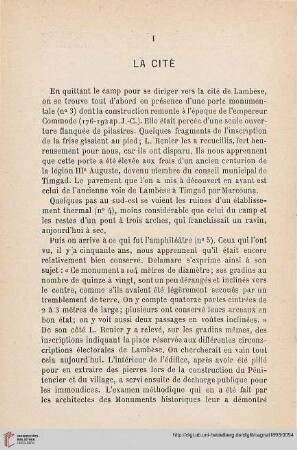
II: La Cité
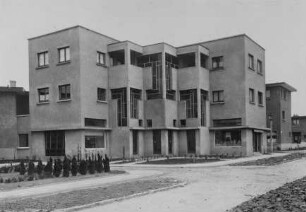
La Cité Moderne
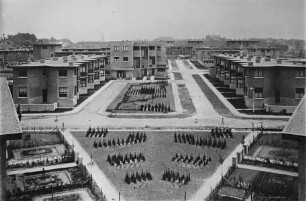
La Cité Moderne

La cité fertile
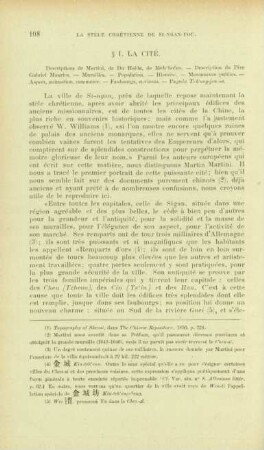
§ I. La cité
![Les 52 [cinquante-deux], 7/8. La politique de la paix](https://iiif.deutsche-digitale-bibliothek.de/image/2/886364cd-b234-4073-b966-0c3d83b9afe0/full/!306,450/0/default.jpg)
Les 52 [cinquante-deux], 7/8. La politique de la paix

La cité maudite, 2
La cité des dames
La cité des dames —
Defendre la paix de la cite: Marsile de Padoue et le probleme du consentement politique au XIVe siecle
De la politique linguistique à la politique, quelle place du chercheur dans la cité?
Histoire politique de la monarchie pontificale au XIVe siècle, ou la papauté à Avignon
II: La Cité
La Cité Moderne
La Cité Moderne
La cité fertile
§ I. La cité
Les 52 [cinquante-deux], 7/8. La politique de la paix
La cité maudite, 2
La cité des dames
La cité des dames —
Defendre la paix de la cite: Marsile de Padoue et le probleme du consentement politique au XIVe siecle
De la politique linguistique à la politique, quelle place du chercheur dans la cité?
Histoire politique de la monarchie pontificale au XIVe siècle, ou la papauté à Avignon
II: La Cité
La Cité Moderne
La Cité Moderne
La cité fertile
§ I. La cité
Les 52 [cinquante-deux], 7/8. La politique de la paix
La cité maudite, 2
La cité des dames