
A shift towards succinate‐producing Prevotella in the ruminal microbiome challenged with monensin
Abstract: The time‐resolved impact of monensin on the active rumen microbiome was studied in a rumen‐simulating technique (Rusitec) with metaproteomic and metabolomic approaches. Monensin treatment caused a decreased fibre degradation potential that was observed by the reduced abundance of proteins assigned to fibrolytic bacteria and glycoside hydrolases, sugar transporters and carbohydrate metabolism. Decreased proteolytic activities resulted in reduced amounts of ammonium as well as branched‐chain fatty acids. The family Prevotellaceae exhibited increased resilience in the presence of monensin, with a switch of the metabolism from acetate to succinate production. Prevotella species harbour a membrane‐bound electron transfer complex, which drives the reduction of fumarate to succinate, which is the substrate for propionate production in the rumen habitat. Besides the increased succinate production, a concomitant depletion of methane concentration was observed upon monensin exposure. Our study demonstrates that Prevotella sp. shifts its metabolism successfully in response to monensin exposure and Prevotellaceae represents the key bacterial family stabilizing the rumen microbiota during exposure to monensin.
- Location
-
Deutsche Nationalbibliothek Frankfurt am Main
- Extent
-
Online-Ressource
- Language
-
Englisch
- Bibliographic citation
-
A shift towards succinate‐producing Prevotella in the ruminal microbiome challenged with monensin ; day:07 ; month:12 ; year:2022 ; extent:14
Proteomics ; (07.12.2022) (gesamt 14)
- Creator
- DOI
-
10.1002/pmic.202200121
- URN
-
urn:nbn:de:101:1-2022120814084715027294
- Rights
-
Open Access; Der Zugriff auf das Objekt ist unbeschränkt möglich.
- Last update
-
15.08.2025, 7:25 AM CEST
Data provider
Deutsche Nationalbibliothek. If you have any questions about the object, please contact the data provider.
Associated
Other Objects (12)

A shift towards succinate‐producing Prevotella in the ruminal microbiome challenged with monensin
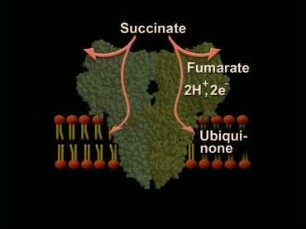
Succinate dehydrogenase
Studies on Succinate Dehydrogenase : 8alpha-Histidyl-FAD as the Active Center of Succinate Dehydrogenase
Ruminal microbiome-host crosstalk stimulates the development of the ruminal epithelium in a lamb model

Ionic conductances of the ruminal epithelium
Ionic conductances of the ruminal epithelium
Bio-Based Succinate Production from Arundo donax Hydrolysate with the New Natural Succinic Acid-Producing Strain Basfia succiniciproducens BPP7
Electrospun Membranes of Poly (butylene succinate) and Poly (butylene/2‐butyl,2‐ethyl‐propylene succinate)
Nitrate decreases ruminal methane production with slight changes to ruminal methanogen composition of nitrate-adapted steers
Zur Chemie thioanaloger Succinate und Glutarate
Succinate mediates inflammation-induced adrenocortical dysfunction
The synthesis of succinate-dehydrogenase riboflavin
A shift towards succinate‐producing Prevotella in the ruminal microbiome challenged with monensin
Succinate dehydrogenase
Studies on Succinate Dehydrogenase : 8alpha-Histidyl-FAD as the Active Center of Succinate Dehydrogenase
Ruminal microbiome-host crosstalk stimulates the development of the ruminal epithelium in a lamb model
Ionic conductances of the ruminal epithelium
Ionic conductances of the ruminal epithelium
Bio-Based Succinate Production from Arundo donax Hydrolysate with the New Natural Succinic Acid-Producing Strain Basfia succiniciproducens BPP7
Electrospun Membranes of Poly (butylene succinate) and Poly (butylene/2‐butyl,2‐ethyl‐propylene succinate)
Nitrate decreases ruminal methane production with slight changes to ruminal methanogen composition of nitrate-adapted steers
Zur Chemie thioanaloger Succinate und Glutarate
Succinate mediates inflammation-induced adrenocortical dysfunction
The synthesis of succinate-dehydrogenase riboflavin
A shift towards succinate‐producing Prevotella in the ruminal microbiome challenged with monensin
Succinate dehydrogenase
Studies on Succinate Dehydrogenase : 8alpha-Histidyl-FAD as the Active Center of Succinate Dehydrogenase
Ruminal microbiome-host crosstalk stimulates the development of the ruminal epithelium in a lamb model
Ionic conductances of the ruminal epithelium
Ionic conductances of the ruminal epithelium
Bio-Based Succinate Production from Arundo donax Hydrolysate with the New Natural Succinic Acid-Producing Strain Basfia succiniciproducens BPP7
Electrospun Membranes of Poly (butylene succinate) and Poly (butylene/2‐butyl,2‐ethyl‐propylene succinate)
Nitrate decreases ruminal methane production with slight changes to ruminal methanogen composition of nitrate-adapted steers
Zur Chemie thioanaloger Succinate und Glutarate
Succinate mediates inflammation-induced adrenocortical dysfunction