
Investigating the thermal state of permafrost with Bayesian inverse modeling of heat transfer
Abstract K yr - 1) and air temperature (0.09–0.11 K yr - 1). We then apply recently developed Bayesian inversion methods to link observed changes in borehole temperatures to unobserved changes in latent heat and active layer thickness using a transient model of heat conduction with phase change. Our results suggest that the degree to which recent warming trends correlate with permafrost thaw depends strongly on both soil freezing characteristics and historical climatology. At the warmest site, a 9 m borehole near Ny-Ålesund, Svalbard, modeled active layer thickness increases by an average of 13 ± cm K - 1 rise in mean annual ground temperature. In stark contrast, modeled rates of thaw at one of the colder sites, a borehole on Samoylov Island in the Lena River delta, appear far less sensitive to temperature change, with a negligible effect of 1 ± cm K - 1. Although our study is limited to just four sites, the results urge caution in the interpretation and comparison of warming trends in Arctic boreholes, indicating significant uncertainty in their implications for the current and future thermal state of permafrost.
- Location
-
Deutsche Nationalbibliothek Frankfurt am Main
- Extent
-
Online-Ressource
- Language
-
Englisch
- Bibliographic citation
-
Investigating the thermal state of permafrost with Bayesian inverse modeling of heat transfer ; volume:17 ; number:8 ; year:2023 ; pages:3505-3533 ; extent:29
The Cryosphere ; 17, Heft 8 (2023), 3505-3533 (gesamt 29)
- Creator
- DOI
-
10.5194/tc-17-3505-2023
- URN
-
urn:nbn:de:101:1-2023083104324238979001
- Rights
-
Open Access; Der Zugriff auf das Objekt ist unbeschränkt möglich.
- Last update
-
14.08.2025, 10:50 AM CEST
Data provider
Deutsche Nationalbibliothek. If you have any questions about the object, please contact the data provider.
Associated
- Groenke, Brian
- Langer, Moritz
- Nitzbon, Jan
- Westermann, Sebastian
- Gallego, Guillermo
- Boike, Julia
Other Objects (12)

Investigating the thermal state of permafrost with Bayesian inverse modeling of heat transfer

Inverse heat transfer problems
Inverse heat conduction problems
Bayesian non-linear statistical inverse problems
Active Subspaces in Bayesian Inverse Problems
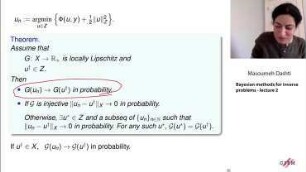
Bayesian methods for inverse problems - lecture 2
Generalized parallel tempering on Bayesian inverse problems
Nonparametric Bayesian inverse problems with Laplacian noise
Generalized parallel tempering on Bayesian inverse problems
Methods for inverse heat conduction problems
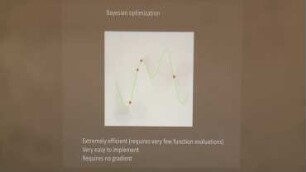
Bayesian optimization for inverse problems in quantum dynamics
Exploring and exploiting hierarchies in Bayesian inverse problems
Investigating the thermal state of permafrost with Bayesian inverse modeling of heat transfer
Inverse heat transfer problems
Inverse heat conduction problems
Bayesian non-linear statistical inverse problems
Active Subspaces in Bayesian Inverse Problems
Bayesian methods for inverse problems - lecture 2
Generalized parallel tempering on Bayesian inverse problems
Nonparametric Bayesian inverse problems with Laplacian noise
Generalized parallel tempering on Bayesian inverse problems
Methods for inverse heat conduction problems
Bayesian optimization for inverse problems in quantum dynamics
Exploring and exploiting hierarchies in Bayesian inverse problems
Investigating the thermal state of permafrost with Bayesian inverse modeling of heat transfer
Inverse heat transfer problems
Inverse heat conduction problems
Bayesian non-linear statistical inverse problems
Active Subspaces in Bayesian Inverse Problems
Bayesian methods for inverse problems - lecture 2
Generalized parallel tempering on Bayesian inverse problems
Nonparametric Bayesian inverse problems with Laplacian noise
Generalized parallel tempering on Bayesian inverse problems
Methods for inverse heat conduction problems
Bayesian optimization for inverse problems in quantum dynamics