
Classifying Urban Green Spaces using a combined Sentinel-2 and Random Forest approach
Abstract. Environmental and human benefits of Urban Green Spaces (UGSs) have been known for a long time. However, the definition of a reasonable greening strategy still remains challenging due to the lack of sufficient baseline information as well as a lack of consensus what constitutes a UGS. Therefore, accurate identification of the existing green spaces in cities is crucial for developing UGS inventories for urban planning and resource management activities. In this paper we explore the potential of freely available highest resolution multi-spectral remote sensing imagery to identify large homogeneous as well small heterogeneous UGSs. The approach of using a Random Forest classification on Sentinel-2 imagery is shown to be useful to identify various UGSs with a 97 % accuracy. Freely available data and a relatively straightforward implementation of the proposed approach makes it a valuable tool for decision and policy makers.
- Location
-
Deutsche Nationalbibliothek Frankfurt am Main
- Extent
-
Online-Ressource
- Language
-
Englisch
- Bibliographic citation
-
Classifying Urban Green Spaces using a combined Sentinel-2 and Random Forest approach ; volume:3 ; year:2022 ; pages:1-6 ; extent:6
AGILE: GIScience series ; 3 (2022), 1-6 (gesamt 6)
- Classification
-
Natürliche Ressourcen, Energie und Umwelt
- Creator
- DOI
-
10.5194/agile-giss-3-38-2022
- URN
-
urn:nbn:de:101:1-2022061605322621718564
- Rights
-
Open Access; Der Zugriff auf das Objekt ist unbeschränkt möglich.
- Last update
-
15.08.2025, 7:33 AM CEST
Data provider
Deutsche Nationalbibliothek. If you have any questions about the object, please contact the data provider.
Associated
Other Objects (12)

Classifying urban green spaces using a combined Sentinel-2 and random forest approach

Classifying spaces and classifying topoi
Realizing Spaces as Classifying Spaces
Rational cohomologies of classifying spaces for homogeneous spaces of small rank
Classifying urban public spaces according to their soundscape
Classifying spaces for proper actions of mapping class groups
On the H_0^A^1} of classifying spaces of algebraic groups

Classifying matters
Classifying matters
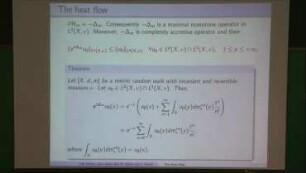
Heat Flow on Metric Random Walk Spaces
Gradient flows in metric random walk spaces
EXPLORING CAPABILITIES OF SENTINEL-2 FOR VEGETATION MAPPING USING RANDOM FOREST
Classifying urban green spaces using a combined Sentinel-2 and random forest approach
Classifying spaces and classifying topoi
Realizing Spaces as Classifying Spaces
Rational cohomologies of classifying spaces for homogeneous spaces of small rank
Classifying urban public spaces according to their soundscape
Classifying spaces for proper actions of mapping class groups
On the H_0^A^1} of classifying spaces of algebraic groups
Classifying matters
Classifying matters
Heat Flow on Metric Random Walk Spaces
Gradient flows in metric random walk spaces
EXPLORING CAPABILITIES OF SENTINEL-2 FOR VEGETATION MAPPING USING RANDOM FOREST
Classifying urban green spaces using a combined Sentinel-2 and random forest approach
Classifying spaces and classifying topoi
Realizing Spaces as Classifying Spaces
Rational cohomologies of classifying spaces for homogeneous spaces of small rank
Classifying urban public spaces according to their soundscape
Classifying spaces for proper actions of mapping class groups
On the H_0^A^1} of classifying spaces of algebraic groups
Classifying matters
Classifying matters
Heat Flow on Metric Random Walk Spaces
Gradient flows in metric random walk spaces