
Measuring redundancy: the relation between concord and complexity
Abstract: Syntagmatic redundancy involves constructions in which a single meaning relates to more than one form in a clause or phrase. Redundancy has been claimed to facilitate language processing and acquisition, and to be a linguistic universal, because of these advantages. At the same time, the repeated expression of meaning has been argued to make languages more complex because of the violation of principles of economy and transparency. This paper first investigates the relation between redundancy and complexity by examining how redundancy scores on well-known metrics of complexity. This assessment shows that redundancy makes languages more complex according to metrics of objective complexity, while it has contradictory effects according to metrics of subjective complexity. To empirically test whether redundancy makes acquisition and processing easier or harder, a cross-linguistically valid way of measuring redundancy first needs to be established. The second part of the paper involves an attempt in this direction. It presents a typological study on cross-linguistic variation in four types of concord, showing that languages differ with respect to the number and types of redundancy constructions they allow. The ranking of the 50 sample languages as to their redundancy-based complexity serves as a testable hypothesis for acquisition and processing research.
- Location
-
Deutsche Nationalbibliothek Frankfurt am Main
- Extent
-
Online-Ressource
- Language
-
Englisch
- Bibliographic citation
-
Measuring redundancy: the relation between concord and complexity ; volume:9 ; number:s1 ; year:2022 ; pages:95-106 ; extent:12
Linguistics vanguard ; 9, Heft s1 (2022), 95-106 (gesamt 12)
- Creator
-
Leufkens, Sterre
- DOI
-
10.1515/lingvan-2020-0143
- URN
-
urn:nbn:de:101:1-2023060114125558925013
- Rights
-
Open Access; Der Zugriff auf das Objekt ist unbeschränkt möglich.
- Last update
- 14.08.2025, 10:49 AM CEST
Data provider
Deutsche Nationalbibliothek. If you have any questions about the object, please contact the data provider.
Associated
- Leufkens, Sterre
Other Objects (12)

Concord

Measuring facial identity and emotion integration using the redundancy gain paradigm

CMBT Concord
![[Eintracht; Concord]](https://iiif.deutsche-digitale-bibliothek.de/image/2/c72aa770-4a13-4869-a99c-f6a1c8984775/full/!306,450/0/default.jpg)
[Eintracht; Concord]

WELLA CONCORD
Time redundancy

Concord, 20, Lexington Rd, First Parish in Concord
Measuring language complexity: challenges and opportunities

WELLA CONCORD FORTE

Concord and liberty
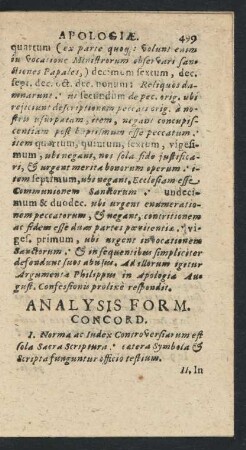
Analysis Form. Concord.

WELLA CONCORD SPECIAL
Concord
Measuring facial identity and emotion integration using the redundancy gain paradigm
CMBT Concord
[Eintracht; Concord]
WELLA CONCORD
Time redundancy
Concord, 20, Lexington Rd, First Parish in Concord
Measuring language complexity: challenges and opportunities
WELLA CONCORD FORTE
Concord and liberty
Analysis Form. Concord.
WELLA CONCORD SPECIAL
Concord
Measuring facial identity and emotion integration using the redundancy gain paradigm
CMBT Concord
[Eintracht; Concord]
WELLA CONCORD
Time redundancy
Concord, 20, Lexington Rd, First Parish in Concord
Measuring language complexity: challenges and opportunities
WELLA CONCORD FORTE
Concord and liberty
Analysis Form. Concord.