
Arbeitspapier
Turn off the faucet: Solving excess water consumption with individual meters
When consumption of water and other utilities is measured collectively and payment for such services is equally shared among members of the group, individuals may use more than what is socially optimal. In this paper, we evaluate how installation of individual meters affects water consumption. Using rich administrative data from the public water utility company in Quito, Ecuador, it is estimated that water consumption decreases by about 8% as a result of the introduction of individual metering. The effect is large and economically significant: in order to obtain the same effect prices would have to double. Individual water metering could be a useful tool to curve down consumption in both developing and developed countries.
- Language
-
Englisch
- Bibliographic citation
-
Series: IDB Working Paper Series ; No. IDB-WP-1152
- Classification
-
Wirtschaft
Consumer Economics: Empirical Analysis
Externalities
Renewable Resources and Conservation: Demand and Supply; Prices
Renewable Resources and Conservation: Water
Environmental Economics: Government Policy
- Subject
-
Water consumption
Commons problem
Institutions
Individual meters
Price elasticity
Regression discontinuity
Difference-in-difference
- Event
-
Geistige Schöpfung
- (who)
-
Carrillo, Paul E.
Contreras, Ivette
Scartascini, Carlos G.
- Event
-
Veröffentlichung
- (who)
-
Inter-American Development Bank (IDB)
- (where)
-
Washington, DC
- (when)
-
2021
- DOI
-
doi:10.18235/0003719
- Handle
- Last update
-
10.03.2025, 11:41 AM CET
Data provider
ZBW - Deutsche Zentralbibliothek für Wirtschaftswissenschaften - Leibniz-Informationszentrum Wirtschaft. If you have any questions about the object, please contact the data provider.
Object type
- Arbeitspapier
Associated
- Carrillo, Paul E.
- Contreras, Ivette
- Scartascini, Carlos G.
- Inter-American Development Bank (IDB)
Time of origin
- 2021
Other Objects (12)
Consumption, money, and excess returns

Consumption, money, and excess returns
Solving consumption models with multiplicative habits
New evidence on the excess smoothness of consumption

Reducing Energy Consumption: The Role of Smart Meters
Trade-Off Between Consumption Growth and Inequality
Transportation Network Density, Domestic Market Integration and Excess Sensitivity of Household Consumption

Interactive electricity grids. New electronic meters measure and manage consumption.
Utilizing artificial intelligence to solving time – cost – quality trade-off problem
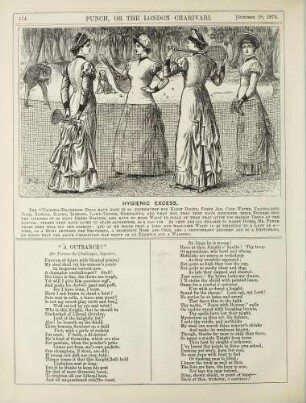
Hygienic excess
Further evidence of excess sensitivity of consumption?. Non-separability among goods and heterogeneity across households
Further evidence of excess sensitivity of consumption?. Non-separability among goods and heterogeneity across households
Consumption, money, and excess returns
Consumption, money, and excess returns
Solving consumption models with multiplicative habits
New evidence on the excess smoothness of consumption
Reducing Energy Consumption: The Role of Smart Meters
Trade-Off Between Consumption Growth and Inequality
Transportation Network Density, Domestic Market Integration and Excess Sensitivity of Household Consumption
Interactive electricity grids. New electronic meters measure and manage consumption.
Utilizing artificial intelligence to solving time – cost – quality trade-off problem
Hygienic excess
Further evidence of excess sensitivity of consumption?. Non-separability among goods and heterogeneity across households
Further evidence of excess sensitivity of consumption?. Non-separability among goods and heterogeneity across households
Consumption, money, and excess returns
Consumption, money, and excess returns
Solving consumption models with multiplicative habits
New evidence on the excess smoothness of consumption
Reducing Energy Consumption: The Role of Smart Meters
Trade-Off Between Consumption Growth and Inequality
Transportation Network Density, Domestic Market Integration and Excess Sensitivity of Household Consumption
Interactive electricity grids. New electronic meters measure and manage consumption.
Utilizing artificial intelligence to solving time – cost – quality trade-off problem
Hygienic excess
Further evidence of excess sensitivity of consumption?. Non-separability among goods and heterogeneity across households