
Erinnerungslücke Holocaust : Die ukrainische Diaspora und der Genozid an den Juden
Rund ein Viertel aller Opfer des Holocaust stammte aus der Ukraine, die Juden kamen oft bei Massenerschießungen in der Nähe ihrer Wohnorte ums Leben. Obwohl der mörderische Genozid hier so präsent war wie kaum anderswo, taucht er in der Erinnerungsliteratur der ukrainischen Diaspora an den Zweiten Weltkrieg so gut wie gar nicht auf. Grzegorz Rossoliński-Liebe, ausgewiesener Spezialist für die Geschichte des ukrainischen Nationalismus, vermisst diesen „weißen Fleck“ des historischen Gedächtnisses und analysiert das Narrativ, das ihn hervorgebracht hat.
Abstract: In the first half of 1944, tens of thousand Ukrainians left their country together with the withdrawing German occupiers in order to avoid confrontation with the approaching Red Army and the Soviet authorities. Between the summer of 1941 and their time of departure, all of these Ukrainians had had some kind of experience with the Holocaust, either as observers, as rescuers or as perpetrators. In the second half of the 1940s they were relocated from DP camps to various western countries such as Australia, Canada, the USA and the United Kingdom, while some remained in West Germany and Austria. In their newspapers and numerous memoirs they frequently described and discussed the Second World War, but they either did not mention the Holocaust at all or portrayed it as a crime committed only by the Nazis and a small group of unpatriotic Ukrainians. The participation of the Ukrainian police, the Organization of Ukrainian Nationalists (OUN) and its Ukrainian Insurgent Army (UPA), and various types of ordinary local Ukrainians did not appear in these memoirs and historical discourses. On the contrary, some of these actors, in particular the members of the OUN and the partisans of the UPA, were commemorated as freedom fighters and national heroes. Concentrating on western Ukraine, this article explores how, during the Cold War, the Ukrainian Diaspora forgot the annihilation of the Jews, turned Holocaust perpetrators and war criminals into heroes of Ukraine, and argued that survivors from eastern Galicia and Volhynia, who mentioned Ukrainians as perpetrators, were Soviet propagandists and Jewish chauvinists.
- Standort
-
Deutsche Nationalbibliothek Frankfurt am Main
- Umfang
-
Online-Ressource
- Sprache
-
Englisch
- Erschienen in
-
Erinnerungslücke Holocaust ; volume:62 ; number:3 ; year:2014 ; pages:397-431 ; extent:35
Vierteljahrshefte für Zeitgeschichte ; 62, Heft 3 (2014), 397-431 (gesamt 35)
- Urheber
- DOI
-
10.1515/vfzg-2014-0020
- URN
-
urn:nbn:de:101:1-2023040314362581238999
- Rechteinformation
-
Open Access; Der Zugriff auf das Objekt ist unbeschränkt möglich.
- Letzte Aktualisierung
- 14.08.2025, 10:58 MESZ
Datenpartner
Dieses Objekt wird bereitgestellt von:
Deutsche Nationalbibliothek.
Bei Fragen zum Objekt wenden Sie sich bitte an den Datenpartner.
Beteiligte
Ähnliche Objekte (12)

Genozid, Holocaust und Israel-Palästina : Geschichte im Selbstzeugnis
Genozid Denkmal & Genozid Museum
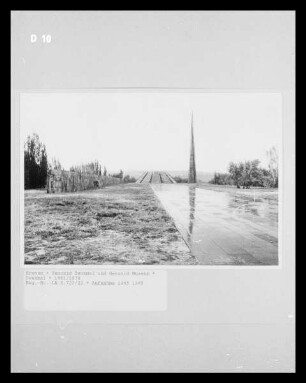
Genozid Denkmal & Genozid Museum — Denkmal
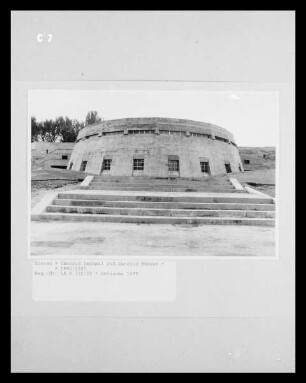
Genozid Denkmal & Genozid Museum — Museum
Genozid
Genozid
Genozid
Der vergessene Holocaust : die Ermordung der ukrainischen Juden ; eine Spurensuche
Der vergessene Holocaust : die Ermordung der ukrainischen Juden ; eine Spurensuche
Der Schmerz des Wissens : die Holocaust- und Genozid-Problematik im Unterricht
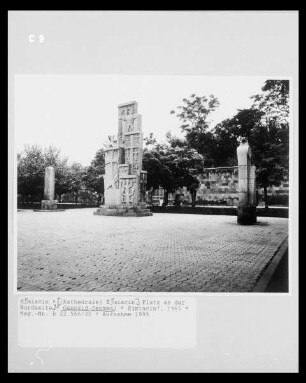
Genozid-Denkmal
Das Schwarzbuch : der Genozid an den sowjetischen Juden
Genozid, Holocaust und Israel-Palästina : Geschichte im Selbstzeugnis
Genozid Denkmal & Genozid Museum
Genozid Denkmal & Genozid Museum — Denkmal
Genozid Denkmal & Genozid Museum — Museum
Genozid
Genozid
Genozid
Der vergessene Holocaust : die Ermordung der ukrainischen Juden ; eine Spurensuche
Der vergessene Holocaust : die Ermordung der ukrainischen Juden ; eine Spurensuche
Der Schmerz des Wissens : die Holocaust- und Genozid-Problematik im Unterricht
Genozid-Denkmal
Das Schwarzbuch : der Genozid an den sowjetischen Juden
Genozid, Holocaust und Israel-Palästina : Geschichte im Selbstzeugnis
Genozid Denkmal & Genozid Museum
Genozid Denkmal & Genozid Museum — Denkmal
Genozid Denkmal & Genozid Museum — Museum
Genozid
Genozid
Genozid
Der vergessene Holocaust : die Ermordung der ukrainischen Juden ; eine Spurensuche
Der vergessene Holocaust : die Ermordung der ukrainischen Juden ; eine Spurensuche
Der Schmerz des Wissens : die Holocaust- und Genozid-Problematik im Unterricht
Genozid-Denkmal