
Arbeitspapier
Family Business Gone Wrong? Ownership Patterns and Corporate Performance in Thailand
Since the Asian currency and economic crises erupted in 1997, many scholars andinternational financial organizations have discussedtheir major causes and proposed policies thatcould overcome the structural weaknesses that apparently led to the crises.In this context, scholars atthe International Monetary Fund, World Bank and numerous otherinstitutions have emphasized theneed for Asian governments to bring about institutional reforms in corporate governance. However,they seem to have paid little attention to the important issue of how to effectively implement theseinstitutional reforms, keeping in mind thereality of Asian corporations rather than the Anglo-American ideal of good corporate governance.The World Bank, in general, and a group of researchers working at that institution, inparticular, have focused on identification of ultimate owners, agency problems, the large gap betweencontrol rights and cashflow rights, and expropriation of minority shareholders. However, it appearsthat in their analysis they have not taken into account the actual functioning of local Asian firms andtheir responses to government institutional reforms after the crisis.
- Language
-
Englisch
- Bibliographic citation
-
Series: ADBI Research Paper Series ; No. 19
- Classification
-
Wirtschaft
- Event
-
Geistige Schöpfung
- (who)
-
Suehiro, Akira
- Event
-
Veröffentlichung
- (who)
-
Asian Development Bank Institute (ADBI)
- (where)
-
Tokyo
- (when)
-
2001
- Handle
- Last update
-
10.03.2025, 11:44 AM CET
Data provider
ZBW - Deutsche Zentralbibliothek für Wirtschaftswissenschaften - Leibniz-Informationszentrum Wirtschaft. If you have any questions about the object, please contact the data provider.
Object type
- Arbeitspapier
Associated
- Suehiro, Akira
- Asian Development Bank Institute (ADBI)
Time of origin
- 2001
Other Objects (12)
Gone wrong!
Gone wrong!

Restoring Competitiveness: What Has Gone Right, What Has Gone Wrong?
Umbilical venous catheterization gone wrong: Hepatic complications
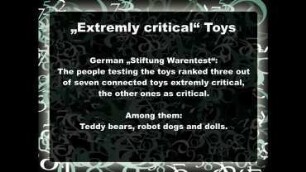
Internet of Fails: Where IoT has gone wrong
The health of the public: What has gone wrong?
Capitalism: What has gone wrong? Who went wrong? Capitalism? The market economy? Governments? "Neoliberal" economics?
Domestic cycles, financial cycles, and policies: What has gone wrong?
Percutaneous Endoscopic Gastrostomy Tube Gone Wrong: Endoscopic Closure to the Rescue
Chronic Fatigue Syndrome and chronic pain conditions – vitally protective systems gone wrong

Ownership Structure and Corporate Performance
Topologische 4-Gone [Gone]
Gone wrong!
Gone wrong!
Restoring Competitiveness: What Has Gone Right, What Has Gone Wrong?
Umbilical venous catheterization gone wrong: Hepatic complications
Internet of Fails: Where IoT has gone wrong
The health of the public: What has gone wrong?
Capitalism: What has gone wrong? Who went wrong? Capitalism? The market economy? Governments? "Neoliberal" economics?
Domestic cycles, financial cycles, and policies: What has gone wrong?
Percutaneous Endoscopic Gastrostomy Tube Gone Wrong: Endoscopic Closure to the Rescue
Chronic Fatigue Syndrome and chronic pain conditions – vitally protective systems gone wrong
Ownership Structure and Corporate Performance
Topologische 4-Gone [Gone]
Gone wrong!
Gone wrong!
Restoring Competitiveness: What Has Gone Right, What Has Gone Wrong?
Umbilical venous catheterization gone wrong: Hepatic complications
Internet of Fails: Where IoT has gone wrong
The health of the public: What has gone wrong?
Capitalism: What has gone wrong? Who went wrong? Capitalism? The market economy? Governments? "Neoliberal" economics?
Domestic cycles, financial cycles, and policies: What has gone wrong?
Percutaneous Endoscopic Gastrostomy Tube Gone Wrong: Endoscopic Closure to the Rescue
Chronic Fatigue Syndrome and chronic pain conditions – vitally protective systems gone wrong
Ownership Structure and Corporate Performance