
Arbeitspapier
Supply shocks and the persistence of inflation
This paper examines the long-run effects of supply shocks (such as oil shocks) on inflation in the United States. The persistence of supply shocks in U.S. inflation fell considerably during the period of Volcker's disinflation (1979-1982). My empirical results suggest that the difference between the pre-Volcker and post-Volcker periods is attributable to the change in the behavior of inflation expectations-agents expected shocks to persist in the pre-Volcker period, but not in the post-Volcker period. I construct a simple model of how different monetary policies lead to different persistence equilibria.
- Language
-
Englisch
- Bibliographic citation
-
Series: Working Paper ; No. 485
- Classification
-
Wirtschaft
Price Level; Inflation; Deflation
Monetary Policy
Central Banks and Their Policies
Studies of Particular Policy Episodes
- Subject
-
inflation
supply shocks
inflation expectations
persistence
Great Inflation
Gesamtwirtschaftliches Angebot
Schock
Inflation
Inflationserwartung
Schätzung
USA
- Event
-
Geistige Schöpfung
- (who)
-
Sommer, Martin
- Event
-
Veröffentlichung
- (who)
-
The Johns Hopkins University, Department of Economics
- (where)
-
Baltimore, MD
- (when)
-
2002
- Handle
- Last update
-
10.03.2025, 11:44 AM CET
Data provider
This object is provided by:
ZBW - Deutsche Zentralbibliothek für Wirtschaftswissenschaften - Leibniz-Informationszentrum Wirtschaft. If you have any questions about the object, please contact the data provider.
ZBW - Deutsche Zentralbibliothek für Wirtschaftswissenschaften - Leibniz-Informationszentrum Wirtschaft. If you have any questions about the object, please contact the data provider.
Object type
- Arbeitspapier
Associated
- Sommer, Martin
- The Johns Hopkins University, Department of Economics
Time of origin
- 2002
Other Objects (12)

Zur Gestaltung der regionalen Infrastruktur für den Verbundbetrieb zwischen Steinkohlenbergwerken und -kraftwerken
Sommer, Martin

Decades Duae Quaestionum Selectissimarum Ex Singulis Fere Iuris Partibus Depromptarum
![Transformation bei Mensch und Maschine [[Elektronische Ressource]] : Parallele Umstrukturierungsprozesse in Unternehmen; am Beispiel der Einführung einer Service-orientierten Architektur (SOA)](/assets/placeholder/searchResultMediaUnknown.png)
Transformation bei Mensch und Maschine [[Elektronische Ressource]] : Parallele Umstrukturierungsprozesse in Unternehmen; am Beispiel der Einführung einer Service-orientierten Architektur (SOA)
Habits, sentiment and predictable income in the dynamics of aggregate consumption
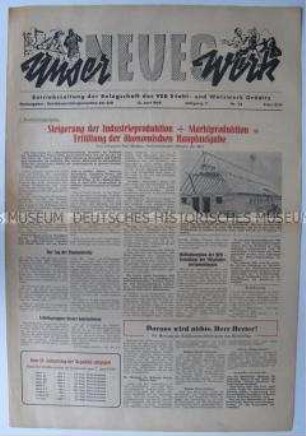
Betriebszeitung des VEB Stahl- und Walzwerk Gröditz u.a. zur "ökonomischen Hauptaufgabe"
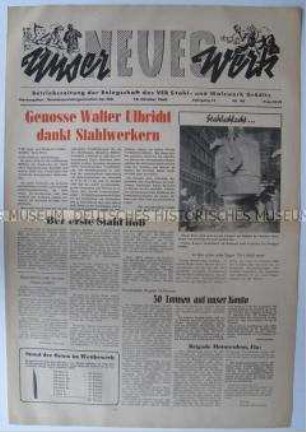
Betriebszeitung des VEB Stahl- und Walzwerk Gröditz
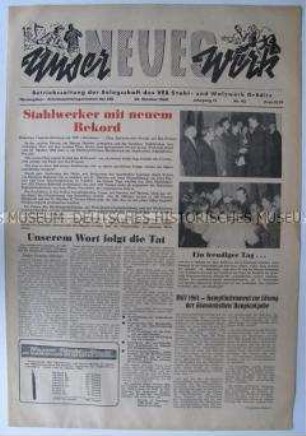
Betriebszeitung des VEB Stahl- und Walzwerk Gröditz u.a. zur Planerfüllung
Typografische Grundlagen
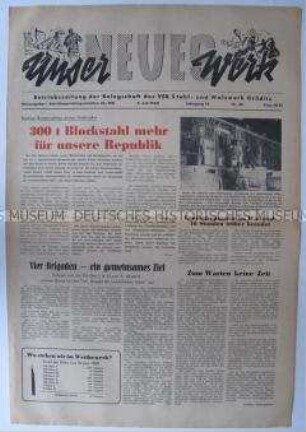
Betriebszeitung des VEB Stahl- und Walzwerk Gröditz u.a. zur Planerfüllung
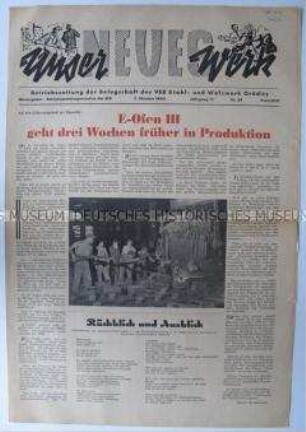
Betriebszeitung des VEB Stahl- und Walzwerk Gröditz u.a. zur Inbetriebnahme eines neuen Schmelzofens
Satztechnik und Typografie - typografische Grundlagen
Zur Gestaltung der regionalen Infrastruktur für den Verbundbetrieb zwischen Steinkohlenbergwerken und -kraftwerken
Sommer, Martin
Decades Duae Quaestionum Selectissimarum Ex Singulis Fere Iuris Partibus Depromptarum
Transformation bei Mensch und Maschine [[Elektronische Ressource]] : Parallele Umstrukturierungsprozesse in Unternehmen; am Beispiel der Einführung einer Service-orientierten Architektur (SOA)
Habits, sentiment and predictable income in the dynamics of aggregate consumption
Betriebszeitung des VEB Stahl- und Walzwerk Gröditz u.a. zur "ökonomischen Hauptaufgabe"
Betriebszeitung des VEB Stahl- und Walzwerk Gröditz
Betriebszeitung des VEB Stahl- und Walzwerk Gröditz u.a. zur Planerfüllung
Typografische Grundlagen
Betriebszeitung des VEB Stahl- und Walzwerk Gröditz u.a. zur Planerfüllung
Betriebszeitung des VEB Stahl- und Walzwerk Gröditz u.a. zur Inbetriebnahme eines neuen Schmelzofens
Satztechnik und Typografie - typografische Grundlagen
Zur Gestaltung der regionalen Infrastruktur für den Verbundbetrieb zwischen Steinkohlenbergwerken und -kraftwerken
Sommer, Martin
Decades Duae Quaestionum Selectissimarum Ex Singulis Fere Iuris Partibus Depromptarum
Transformation bei Mensch und Maschine [[Elektronische Ressource]] : Parallele Umstrukturierungsprozesse in Unternehmen; am Beispiel der Einführung einer Service-orientierten Architektur (SOA)
Habits, sentiment and predictable income in the dynamics of aggregate consumption
Betriebszeitung des VEB Stahl- und Walzwerk Gröditz u.a. zur "ökonomischen Hauptaufgabe"
Betriebszeitung des VEB Stahl- und Walzwerk Gröditz
Betriebszeitung des VEB Stahl- und Walzwerk Gröditz u.a. zur Planerfüllung
Typografische Grundlagen
Betriebszeitung des VEB Stahl- und Walzwerk Gröditz u.a. zur Planerfüllung
Betriebszeitung des VEB Stahl- und Walzwerk Gröditz u.a. zur Inbetriebnahme eines neuen Schmelzofens