
Arbeitspapier
How important is Methodology for the Estimates of the Determinants of Happiness?
Psychologists and sociologists usually interpret answers to happiness surveys as cardinal and comparableacross respondents (Kahneman et al. 1999). As a result, these social scientists run OLS regressionson happiness and changes in happiness. Economists, on the other hand, usually only assume ordinalcomparability and have mainly used ordered latent response models. As a consequence, economists haveby and large not taken satisfactory account of fixed individual traits. We address this latter problemby developing a conditional estimator for the fixed-effect ordered logit model. The empirical findingspresented show that it makes virtually no difference whether one assumes ordinality or cardinality ofhappiness answers, whilst allowing for fixed-effects does change results substantially. This leads us toadvocate allowing for and endogenising the persistent personality traits that make up these fixed-effects.
- Language
-
Englisch
- Bibliographic citation
-
Series: Tinbergen Institute Discussion Paper ; No. 02-024/3
- Classification
-
Wirtschaft
Single Equation Models; Single Variables: Panel Data Models; Spatio-temporal Models
Single Equation Models; Single Variables: Discrete Regression and Qualitative Choice Models; Discrete Regressors; Proportions; Probabilities
General Welfare; Well-Being
- Subject
-
Fixed effects
happiness methodology
unobservables
latent variabIe models
Lebensqualität
Schätzung
Logit-Modell
- Event
-
Geistige Schöpfung
- (who)
-
Ferrer-i-Carbonell, Ada
Frijters, Paul
- Event
-
Veröffentlichung
- (who)
-
Tinbergen Institute
- (where)
-
Amsterdam and Rotterdam
- (when)
-
2002
- Handle
- Last update
-
10.03.2025, 11:43 AM CET
Data provider
ZBW - Deutsche Zentralbibliothek für Wirtschaftswissenschaften - Leibniz-Informationszentrum Wirtschaft. If you have any questions about the object, please contact the data provider.
Object type
- Arbeitspapier
Associated
- Ferrer-i-Carbonell, Ada
- Frijters, Paul
- Tinbergen Institute
Time of origin
- 2002
Other Objects (12)

What Drives Happiness? The Interviewer’s Happiness

The happiness of the oyster
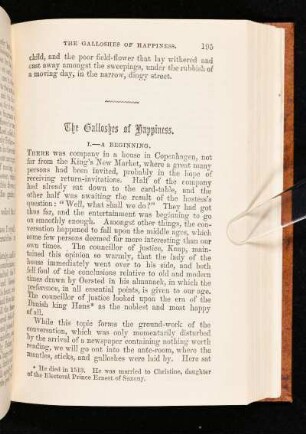
The Galloshes of Happiness.

The Promise of Happiness
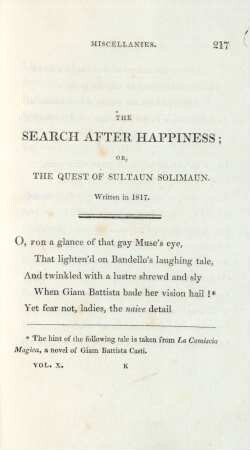
The search after happiness; ...
The macroeconomics of happiness
The great happiness moderation
The key to happiness
The great happiness moderation
The Economics of Happiness
The economics of happiness
The pursuit of happiness
What Drives Happiness? The Interviewer’s Happiness
The happiness of the oyster
The Galloshes of Happiness.
The Promise of Happiness
The search after happiness; ...
The macroeconomics of happiness
The great happiness moderation
The key to happiness
The great happiness moderation
The Economics of Happiness
The economics of happiness
The pursuit of happiness
What Drives Happiness? The Interviewer’s Happiness
The happiness of the oyster
The Galloshes of Happiness.
The Promise of Happiness
The search after happiness; ...
The macroeconomics of happiness
The great happiness moderation
The key to happiness
The great happiness moderation
The Economics of Happiness
The economics of happiness