
Is Tunisia really democratising? Progress, resistance, and an uncertain outlook
Abstract: January 2019 marked the eighth anniversary of the end of the Ben Ali dictatorship - the celebrations however were marred by massive social protests. Opinions both in Tunisia and abroad differ about the state of Tunisia's political development as it gears up for its second parliamentary and presidential elections since the adoption of the new constitution in 2014. While some consider its democratisation to be virtually complete, others fear a relapse into autocracy. Despite its considerable democratic achievements, Tunisia is in danger of developing into a hybrid system: part democratic, part authoritarian. This is not only due to the difficult economic and regional context. Critically, the political, economic and administrative networks of the old system, as well as persistent authoritarian practices and "old" rhetoric in politics and society, complicate the deepening of its fragile democracy. Tunisia’s international partners should make it their explicit objective to weaken these
- Standort
-
Deutsche Nationalbibliothek Frankfurt am Main
- Umfang
-
Online-Ressource, 8 S.
- Sprache
-
Englisch
- Anmerkungen
-
Veröffentlichungsversion
begutachtet
- Erschienen in
-
SWP Comment ; Bd. 13/2019
- Klassifikation
-
Politik
- Ereignis
-
Veröffentlichung
- (wo)
-
Berlin
- (wann)
-
2019
- Urheber
- Beteiligte Personen und Organisationen
-
Stiftung Wissenschaft und Politik -SWP- Deutsches Institut für Internationale Politik und Sicherheit
- DOI
-
10.18449/2019C13
- URN
-
urn:nbn:de:0168-ssoar-62096-6
- Rechteinformation
-
Open Access unbekannt; Open Access; Der Zugriff auf das Objekt ist unbeschränkt möglich.
- Letzte Aktualisierung
- 14.08.2025, 10:58 MESZ
Datenpartner
Dieses Objekt wird bereitgestellt von:
Deutsche Nationalbibliothek.
Bei Fragen zum Objekt wenden Sie sich bitte an den Datenpartner.
Beteiligte
- Gallien, Max
- Werenfels, Isabelle
- Stiftung Wissenschaft und Politik -SWP- Deutsches Institut für Internationale Politik und Sicherheit
Entstanden
- 2019
Ähnliche Objekte (12)

Is Tunisia really democratising? Progress, resistance, and an uncertain outlook
Is Tunisia really democratising? Progress, resistance, and an uncertain outlook
Is Tunisia really democratising? : progress, resistance, and an uncertain outlook
CIPEC: Uncertain outlook

The WITH project : progress report and outlook
Stroke–heart syndrome: current progress and future outlook
Cruise sector challenges : making progress in an uncertain world
The Progress and Outlook of Multivalent‐Ion‐Based Electrochromism
Environmental Earth Sciences Progress Report 2020 and Outlook 2021
Environmental Earth Sciences Progress Report 2020 and Outlook 2021

Tunísia
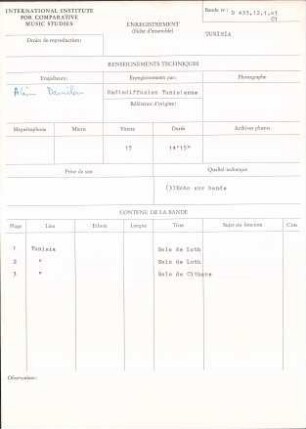
Tunisia
Is Tunisia really democratising? Progress, resistance, and an uncertain outlook
Is Tunisia really democratising? Progress, resistance, and an uncertain outlook
Is Tunisia really democratising? : progress, resistance, and an uncertain outlook
CIPEC: Uncertain outlook
The WITH project : progress report and outlook
Stroke–heart syndrome: current progress and future outlook
Cruise sector challenges : making progress in an uncertain world
The Progress and Outlook of Multivalent‐Ion‐Based Electrochromism
Environmental Earth Sciences Progress Report 2020 and Outlook 2021
Environmental Earth Sciences Progress Report 2020 and Outlook 2021
Tunísia
Tunisia
Is Tunisia really democratising? Progress, resistance, and an uncertain outlook
Is Tunisia really democratising? Progress, resistance, and an uncertain outlook
Is Tunisia really democratising? : progress, resistance, and an uncertain outlook
CIPEC: Uncertain outlook
The WITH project : progress report and outlook
Stroke–heart syndrome: current progress and future outlook
Cruise sector challenges : making progress in an uncertain world
The Progress and Outlook of Multivalent‐Ion‐Based Electrochromism
Environmental Earth Sciences Progress Report 2020 and Outlook 2021
Environmental Earth Sciences Progress Report 2020 and Outlook 2021
Tunísia