
Artikel
The anatomy of Russia’s grip on Armenia: Bound to persist?
The 2018 “Velvet revolution” in Armenia has engendered a bunch of unanswered questions regarding both its domestic as well as foreign policy implications. Given the newly-elected prime minister’s critical stances on Armenia’s plight in the Russia-led unions, it is easy to resort to speculations about possible foreign policy changes. This study analyses the anatomy of Russia’s powerful grip on Armenia, with a focus on country’s huge economic dependence on Russia, the “frozen” Nagorno-Karabakh conflict, as well as Kremlin’s traditional special ties with Armenian incumbents. Even though a breakthrough on reducing the enormous asymmetry in Armenian-Russian relations is unlikely anytime soon, owing to its vast legitimacy the new Armenian government may well reinforce its agency. That said, in theory it has an opportunity to cut back the heavy reliance on Kremlin’s overwhelming political and economic support and somewhat rectify its compliant foreign policy behavior. Yet, further research is essential for in-depth analysis of ruling elite’s interactions with Kremlin.
- Language
-
Englisch
- Bibliographic citation
-
Journal: CES Working Papers ; ISSN: 2067-7693 ; Volume: 10 ; Year: 2018 ; Issue: 2 ; Pages: 234-250 ; Iasi: Alexandru Ioan Cuza University of Iasi, Centre for European Studies
- Classification
-
Wirtschaft
- Subject
-
Armenian-Russian relations
Armenian “Velvet Revolution”
Nagorno-Karabakh conflict
authoritarianism promotion
- Event
-
Geistige Schöpfung
- (who)
-
Terzyan, Aram
- Event
-
Veröffentlichung
- (who)
-
Alexandru Ioan Cuza University of Iasi, Centre for European Studies
- (where)
-
Iasi
- (when)
-
2018
- Handle
- Last update
-
10.03.2025, 11:42 AM CET
Data provider
ZBW - Deutsche Zentralbibliothek für Wirtschaftswissenschaften - Leibniz-Informationszentrum Wirtschaft. If you have any questions about the object, please contact the data provider.
Object type
- Artikel
Associated
- Terzyan, Aram
- Alexandru Ioan Cuza University of Iasi, Centre for European Studies
Time of origin
- 2018
Other Objects (12)

Russia’s Iconoclasms

Why does patriarchy persist?

Armenia
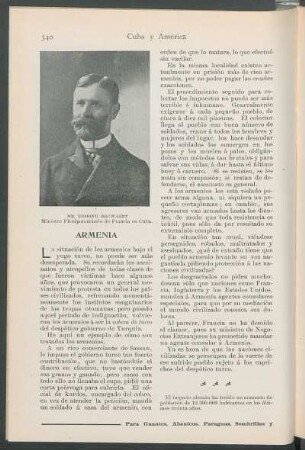
Armenia.

Armenia

Armenia

Armenia

Armenia

Armenia

Armenia
Armenia
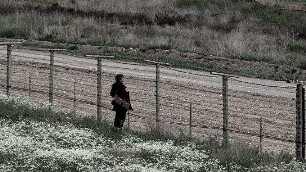
Armenia
Russia’s Iconoclasms
Why does patriarchy persist?
Armenia
Armenia.
Armenia
Armenia
Armenia
Armenia
Armenia
Armenia
Armenia
Armenia
Russia’s Iconoclasms
Why does patriarchy persist?
Armenia
Armenia.
Armenia
Armenia
Armenia
Armenia
Armenia
Armenia
Armenia