
A rationale for unanimity in committees
Abstract: Existing theoretical and experimental studies have established that unanimity is a poor decision rule for promoting information aggregation. Despite this, unanimity is frequently used in committees making decisions on behalf of society. This paper shows that when committee members are exposed to "idiosyncratic" payoffs that condition on their individual vote, unanimity can facilitate truthful communication and optimal information aggregation. Theoretically, we show that since agents" votes are not always pivotal, majority rule suffers from a free-rider problem. Unanimity mitigates free-riding since responsibility for the committee's decision is equally distributed across all agents. We test our predictions in a controlled laboratory experiment. As predicted, if unanimity is required, subjects are more truthful, respond more to others' messages, and are ultimately more likely to make the optimal decision. Idiosyncratic payoffs such as a moral bias thus present a rationale for the wi
- Standort
-
Deutsche Nationalbibliothek Frankfurt am Main
- Umfang
-
Online-Ressource, 41 S.
- Sprache
-
Englisch
- Anmerkungen
-
Veröffentlichungsversion
begutachtet
- Erschienen in
-
Discussion Papers / Wissenschaftszentrum Berlin für Sozialforschung, Forschungsschwerpunkt Markt und Entscheidung, Abteilung Ökonomik des Wandels ; Bd. SP II 2017-308
- Klassifikation
-
Politik
- Ereignis
-
Veröffentlichung
- (wo)
-
Mannheim
- (wer)
-
SSOAR, GESIS – Leibniz-Institut für Sozialwissenschaften e.V.
- (wann)
-
2017
- Ereignis
-
Veröffentlichung
- (wo)
-
Berlin
- (wer)
-
Wissenschaftszentrum Berlin für Sozialforschung gGmbH
- (wann)
-
2017
- Urheber
- Beteiligte Personen und Organisationen
-
Wissenschaftszentrum Berlin für Sozialforschung gGmbH
- URN
-
urn:nbn:de:101:1-2022020211234185412822
- Rechteinformation
-
Open Access; Der Zugriff auf das Objekt ist unbeschränkt möglich.
- Letzte Aktualisierung
- 15.08.2025, 07:21 MESZ
Datenpartner
Deutsche Nationalbibliothek. Bei Fragen zum Objekt wenden Sie sich bitte an den Datenpartner.
Beteiligte
- Breitmoser, Yves
- Valasek, Justin
- Wissenschaftszentrum Berlin für Sozialforschung gGmbH
- SSOAR, GESIS – Leibniz-Institut für Sozialwissenschaften e.V.
Entstanden
- 2017
Ähnliche Objekte (12)

A rationale for unanimity in committees
Committees
Committees
Committees
Committees
Committees
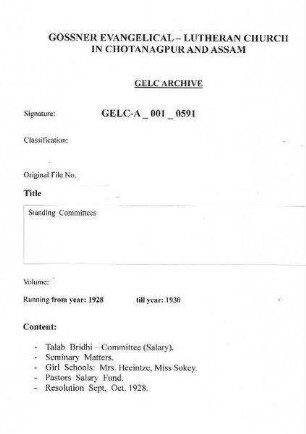
Standing Committees
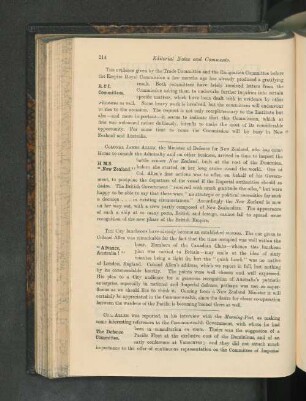
R.C.I. Committees.

Visiting Committees
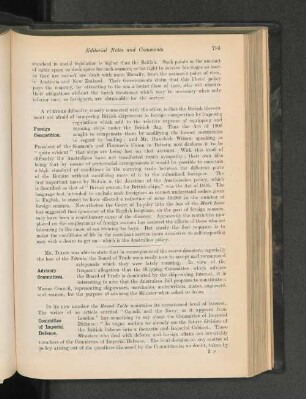
Advisory Committees.

Committees, sub-committees of the Basel Evangelical missionary society
Social Studies Committees
A rationale for unanimity in committees
Committees
Committees
Committees
Committees
Committees
Standing Committees
R.C.I. Committees.
Visiting Committees
Advisory Committees.
Committees, sub-committees of the Basel Evangelical missionary society
Social Studies Committees
A rationale for unanimity in committees
Committees
Committees
Committees
Committees
Committees
Standing Committees
R.C.I. Committees.
Visiting Committees
Advisory Committees.
Committees, sub-committees of the Basel Evangelical missionary society