
Arbeitspapier
The impact of green preferences on the relevance of history versus expectations
In an OLG model with multiple steady states we analyse the impact of endogenous environmental policies on the relevance of history and expectations for the equilibrium selection. In a polluting regime environmental preferences cause an increasing energy tax which raises the risk that the economy transits to the inferior equilibrium under pessimistic expectations. However, higher environmental preferences imply an earlier switch to the clean energy regime. Then, the conflict between production and environmental preferences is resolved and the prospects to select the superior equilibrium improve, since positive expectations become more relevant. In an empirical analysis we find that people with environmental preferences tend to have more optimistic expectations about economic development. Using these findings to analyse the steady state dynamics implies that agents with environmental preferences support higher energy taxes and switch faster to clean production. Due to their optimism, the likelihood to reach the superior stable steady state increases.
- Language
-
Englisch
- Bibliographic citation
-
Series: Economics Working Paper Series ; No. 18/305
- Classification
-
Wirtschaft
Energy and the Macroeconomy
Environment and Growth
Environmental Economics: General
Macroeconomic Analyses of Economic Development
- Subject
-
Expectations
Multiple Equilibria
Endogenous Taxation
Green Preferences
- Event
-
Geistige Schöpfung
- (who)
-
Schäfer, Andreas
Stünzi, Anna
- Event
-
Veröffentlichung
- (who)
-
ETH Zurich, CER-ETH - Center of Economic Research
- (where)
-
Zurich
- (when)
-
2018
- DOI
-
doi:10.3929/ethz-b-000308060
- Handle
- Last update
-
10.03.2025, 11:42 AM CET
Data provider
ZBW - Deutsche Zentralbibliothek für Wirtschaftswissenschaften - Leibniz-Informationszentrum Wirtschaft. If you have any questions about the object, please contact the data provider.
Object type
- Arbeitspapier
Associated
- Schäfer, Andreas
- Stünzi, Anna
- ETH Zurich, CER-ETH - Center of Economic Research
Time of origin
- 2018
Other Objects (12)

Untersuchungen zur Keimreduktion im Naso- und Oropharynx und zur Entstehung möglicher pulmonaler Infektionen bei langzeitbeatmeten Patienten durch die prophylaktische Anwendung antiseptischer Zubereitungen rein pflanzlicher Herkunft im Vergleich zu einer Polyvidon-Jodlösung
Schäfer, Andreas
Schutzgesuch des Andreas Schäfer nach Hüttenheim
Wirkung von Manganoxid in Kombination mit Eisen- und Aluminiumoxid in intratrachealen Tests an Ratten im Hinblick auf die Genese der Schweisserlunge und ihrer Bewertung in der Literatur
Untersuchungen der zellulären Immunantwort gegen spontane AKR-Leukämien
Schäfer, Andreas
Schäfer, Andreas
Nullstellenberechnung für Polynome in Newtonform mit Anwendung auf das lineare Eigenwertproblem
Bedeutung von Gastric Inhibitory Polypeptide (GIP) bei der Regulation der Insulinfreisetzung am Pankreas in vivo am Modell wacher hyperthyreoter Ratten
Konkurs des Andreas Schäfer zu Iffigheim
Diebstahl des Andreas Schäfer zu Iffigheim
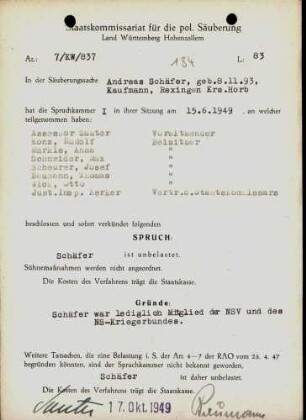
Schäfer, Andreas
Untersuchungen zur Keimreduktion im Naso- und Oropharynx und zur Entstehung möglicher pulmonaler Infektionen bei langzeitbeatmeten Patienten durch die prophylaktische Anwendung antiseptischer Zubereitungen rein pflanzlicher Herkunft im Vergleich zu einer Polyvidon-Jodlösung
Schäfer, Andreas
Schutzgesuch des Andreas Schäfer nach Hüttenheim
Wirkung von Manganoxid in Kombination mit Eisen- und Aluminiumoxid in intratrachealen Tests an Ratten im Hinblick auf die Genese der Schweisserlunge und ihrer Bewertung in der Literatur
Untersuchungen der zellulären Immunantwort gegen spontane AKR-Leukämien
Schäfer, Andreas
Schäfer, Andreas
Nullstellenberechnung für Polynome in Newtonform mit Anwendung auf das lineare Eigenwertproblem
Bedeutung von Gastric Inhibitory Polypeptide (GIP) bei der Regulation der Insulinfreisetzung am Pankreas in vivo am Modell wacher hyperthyreoter Ratten
Konkurs des Andreas Schäfer zu Iffigheim
Diebstahl des Andreas Schäfer zu Iffigheim
Schäfer, Andreas
Untersuchungen zur Keimreduktion im Naso- und Oropharynx und zur Entstehung möglicher pulmonaler Infektionen bei langzeitbeatmeten Patienten durch die prophylaktische Anwendung antiseptischer Zubereitungen rein pflanzlicher Herkunft im Vergleich zu einer Polyvidon-Jodlösung
Schäfer, Andreas
Schutzgesuch des Andreas Schäfer nach Hüttenheim
Wirkung von Manganoxid in Kombination mit Eisen- und Aluminiumoxid in intratrachealen Tests an Ratten im Hinblick auf die Genese der Schweisserlunge und ihrer Bewertung in der Literatur
Untersuchungen der zellulären Immunantwort gegen spontane AKR-Leukämien
Schäfer, Andreas
Schäfer, Andreas
Nullstellenberechnung für Polynome in Newtonform mit Anwendung auf das lineare Eigenwertproblem
Bedeutung von Gastric Inhibitory Polypeptide (GIP) bei der Regulation der Insulinfreisetzung am Pankreas in vivo am Modell wacher hyperthyreoter Ratten
Konkurs des Andreas Schäfer zu Iffigheim
Diebstahl des Andreas Schäfer zu Iffigheim