
Bericht
The 14th election to India's Lower House
The election to India's lower house of parliament (Lok Sabha), which took place in five phases between April 20 and May 20, 2004, resulted in three major surprises. First, contrary to all forecasts, the opposition Congress Party and its United Progressive Alliance (UPA) defeated the ruling Bharatiya Janata Party (BJP) and the National Democratic Alliance (NDA). Second, Manmohan Singh became India's first Sikh prime minister. And third, against all expectations, the country's communist parties polled their best results ever.The election's outcome underlined the trend towards regionalization of India's party system and strengthened the country's secular forces. But voters once again failed to produce clear majorities. The new Congress Party-led minority government will have to depend on cooperation with the communist parties. Thanks to the basic consensus among the large parties concerning key foreign and economic issues, the liberalization and reform of India's economy will continue. However, future economic policy will pay greater attention to rural areas. (SWP Comments / SWP)
- Language
-
Englisch
- Bibliographic citation
-
Series: SWP Comments ; No. 11/2004
- Classification
-
Politik
- Event
-
Geistige Schöpfung
- (who)
-
Wagner, Christian
- Event
-
Veröffentlichung
- (who)
-
Stiftung Wissenschaft und Politik (SWP)
- (where)
-
Berlin
- (when)
-
2004
- Handle
- Last update
-
10.03.2025, 11:42 AM CET
Data provider
ZBW - Deutsche Zentralbibliothek für Wirtschaftswissenschaften - Leibniz-Informationszentrum Wirtschaft. If you have any questions about the object, please contact the data provider.
Object type
- Bericht
Associated
- Wagner, Christian
- Stiftung Wissenschaft und Politik (SWP)
Time of origin
- 2004
Other Objects (12)
![Kapitalienbuch des Rudolf-Sophien-Stifts in Stuttgart auf die Rechnungsjahre 1944 bis [1946]](/assets/placeholder/searchResultMediaNoDigitisedMedia.png)
Kapitalienbuch des Rudolf-Sophien-Stifts in Stuttgart auf die Rechnungsjahre 1944 bis [1946]
Löschung der Hypothek der Rudolf-Sophien-Stiftung auf dem Grundstück des Ehepaares Christian Wagner in Bad Cannstatt

Christian Wagner aus Höfingen, gef. zu Leonberg, weil er ein von Juden geliehenes Hauptgut samt Zinsen nicht zurückgegeben hatte und trotz eines Befehls des Leonberger Vogts bis zur Bezahlung nicht außer Landes geblieben, sondern wieder heimgekehrt war, jedoch auf Fürbitte weiterer Rechtfertigung enthoben und auf künftiges Wohlverhalten freigelassen, schwört U.
Die Flucht der Frauen

Christian Wagner: Rechtfertigungsschreiben an Landgraf Karl, 1716

De originibus Saalfeldi urbis in Thuringia sitae

Christian Wagner: Mechanische Krafft eines neu erfundenen Poch-Werckes ...
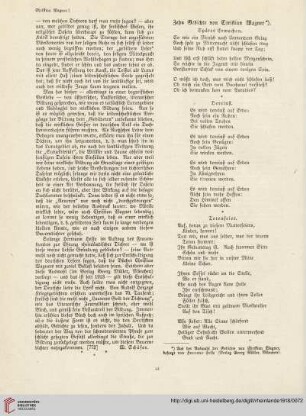
Zehn Gedichte
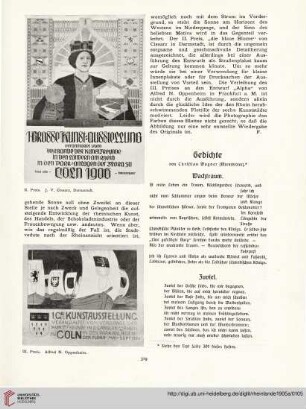
Gedichte
Klassenzahl 5, 6 und 7
Großmacht im Wartestand? Indische Außenpolitik am Beginn des 21. Jahrhunderts
Experimentelle und theoretische Untersuchungen zum Ein-Atom-Maser
Kapitalienbuch des Rudolf-Sophien-Stifts in Stuttgart auf die Rechnungsjahre 1944 bis [1946]
Löschung der Hypothek der Rudolf-Sophien-Stiftung auf dem Grundstück des Ehepaares Christian Wagner in Bad Cannstatt
Christian Wagner aus Höfingen, gef. zu Leonberg, weil er ein von Juden geliehenes Hauptgut samt Zinsen nicht zurückgegeben hatte und trotz eines Befehls des Leonberger Vogts bis zur Bezahlung nicht außer Landes geblieben, sondern wieder heimgekehrt war, jedoch auf Fürbitte weiterer Rechtfertigung enthoben und auf künftiges Wohlverhalten freigelassen, schwört U.
Die Flucht der Frauen
Christian Wagner: Rechtfertigungsschreiben an Landgraf Karl, 1716
De originibus Saalfeldi urbis in Thuringia sitae
Christian Wagner: Mechanische Krafft eines neu erfundenen Poch-Werckes ...
Zehn Gedichte
Gedichte
Klassenzahl 5, 6 und 7
Großmacht im Wartestand? Indische Außenpolitik am Beginn des 21. Jahrhunderts
Experimentelle und theoretische Untersuchungen zum Ein-Atom-Maser
Kapitalienbuch des Rudolf-Sophien-Stifts in Stuttgart auf die Rechnungsjahre 1944 bis [1946]
Löschung der Hypothek der Rudolf-Sophien-Stiftung auf dem Grundstück des Ehepaares Christian Wagner in Bad Cannstatt
Christian Wagner aus Höfingen, gef. zu Leonberg, weil er ein von Juden geliehenes Hauptgut samt Zinsen nicht zurückgegeben hatte und trotz eines Befehls des Leonberger Vogts bis zur Bezahlung nicht außer Landes geblieben, sondern wieder heimgekehrt war, jedoch auf Fürbitte weiterer Rechtfertigung enthoben und auf künftiges Wohlverhalten freigelassen, schwört U.
Die Flucht der Frauen
Christian Wagner: Rechtfertigungsschreiben an Landgraf Karl, 1716
De originibus Saalfeldi urbis in Thuringia sitae
Christian Wagner: Mechanische Krafft eines neu erfundenen Poch-Werckes ...
Zehn Gedichte
Gedichte
Klassenzahl 5, 6 und 7
Großmacht im Wartestand? Indische Außenpolitik am Beginn des 21. Jahrhunderts