
Arbeitspapier
The minimum approval mechanism implements the efficient public good allocation theoretically and experimentally
We propose the minimum approval mechanism (MAM) for a standard linear public good environment with two players. Players simultaneously and privately choose their contributions to the public good in the first stage. In the second stage, they simultaneously decide whether to approve the other's choice. Both contribute what they choose in the first stage if both players approve; otherwise, both contribute the minimum of the two choices in the first stage. The MAM implements the Pareto-efficient allocation in backward elimination of weakly dominated strategies (BEWDS) and is unique under plausible conditions. Contributions in the MAM experiment overall averaged 94.9%. The data support BEWDS rather than subgame perfect Nash equilibria. Quantifying subjects' responses to the questionnaire showed that the majority of subjects in the MAM found a heuristic or an algorithm named diagonalization and supported the notions of minimax regret and iterated best response, all of which mimic BEWDS outcomes.
- Language
-
Englisch
- Bibliographic citation
-
Series: ISER Discussion Paper ; No. 874
- Classification
-
Wirtschaft
Noncooperative Games
Design of Experiments: Laboratory, Group Behavior
Conflict; Conflict Resolution; Alliances; Revolutions
Public Goods
Other Economic Systems: Public Economics; Financial Economics
- Subject
-
Public good experiment
Approval mechanism
Assumed equilibrium concepts
Öffentliche Güter
Allokation
Pareto-Optimum
Nash-Gleichgewicht
Nichtkooperatives Spiel
Test
- Event
-
Geistige Schöpfung
- (who)
-
Masuda, Takehito
Okano, Yoshitaka
Saijo, Tatsuyoshi
- Event
-
Veröffentlichung
- (who)
-
Osaka University, Institute of Social and Economic Research (ISER)
- (where)
-
Osaka
- (when)
-
2013
- Handle
- Last update
-
10.03.2025, 11:44 AM CET
Data provider
ZBW - Deutsche Zentralbibliothek für Wirtschaftswissenschaften - Leibniz-Informationszentrum Wirtschaft. If you have any questions about the object, please contact the data provider.
Object type
- Arbeitspapier
Associated
- Masuda, Takehito
- Okano, Yoshitaka
- Saijo, Tatsuyoshi
- Osaka University, Institute of Social and Economic Research (ISER)
Time of origin
- 2013
Other Objects (12)
Implements
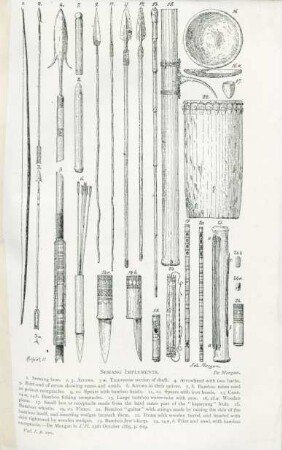
Semang implements
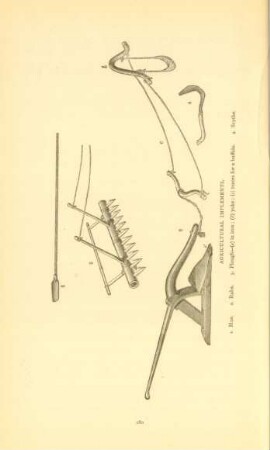
Agricultural implements

Stone Implements
Kota implements, &c.
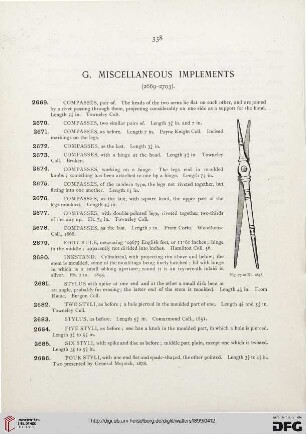
G: Miscellaneous implements
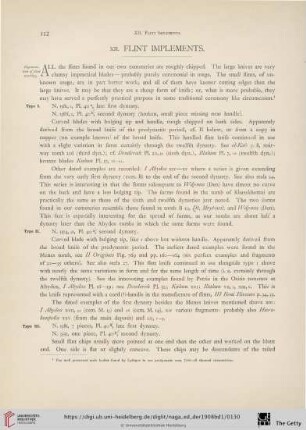
XII. Flint Implements
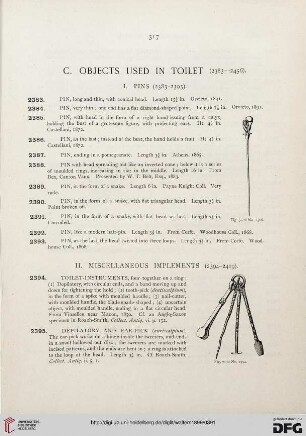
II: Miscellaneous implements
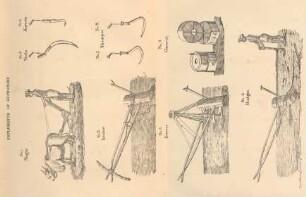
Implements of husbandry
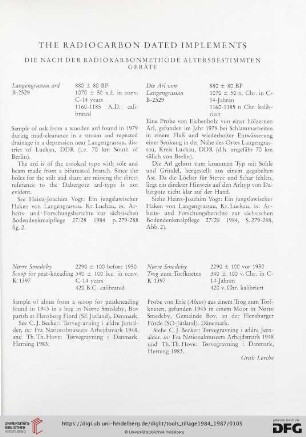
The Radiocarbon Dated Implements
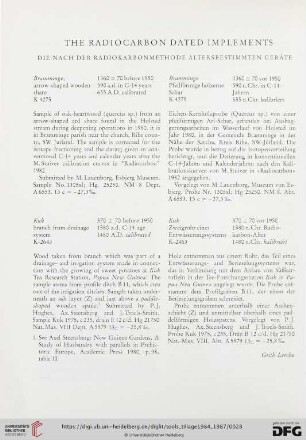
The Radiocarbon Dated Implements
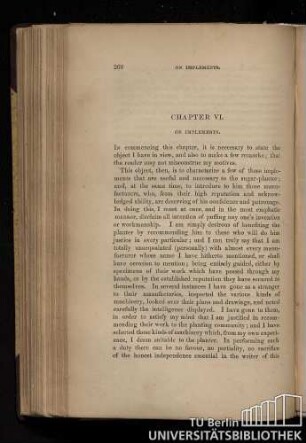
Chapter VI. On implements
Implements
Semang implements
Agricultural implements
Stone Implements
Kota implements, &c.
G: Miscellaneous implements
XII. Flint Implements
II: Miscellaneous implements
Implements of husbandry
The Radiocarbon Dated Implements
The Radiocarbon Dated Implements
Chapter VI. On implements
Implements
Semang implements
Agricultural implements
Stone Implements
Kota implements, &c.
G: Miscellaneous implements
XII. Flint Implements
II: Miscellaneous implements
Implements of husbandry
The Radiocarbon Dated Implements
The Radiocarbon Dated Implements