
Polarisation and politicisation: the social media strategies of Indian political parties
Abstract: Ahead of the general election in April and May 2019, Indian political parties are using social media aggressively to propagate their ideology, mobilise public opinion, set policy agendas, and discredit detractors. Since the 2014 general election, India's two major political parties -the Bharatiya Janata Party, which currently leads the coalition government, and the Indian National Congress, the main opposition party- have invested heavily in digital political campaigning. Political parties use social media to directly and continuously engage with voters. More so than traditional media, social media can amplify and mobilise political opinions and reach out to even the remotest geographical areas. Social media's unique value is that it allows for both mass messaging and micro-targeting. Bolstered by grass-roots campaigning, it is immensely powerful in moulding public opinion both in India and beyond. While facilitating civic engagement for a more participatory democracy, social media
- Alternative title
-
Polarisierung und Politisierung: soziale Medien im indischen Wahlkampf
- Location
-
Deutsche Nationalbibliothek Frankfurt am Main
- Extent
-
Online-Ressource, 14 S.
- Language
-
Englisch
- Notes
-
Veröffentlichungsversion
nicht begutachtet
- Bibliographic citation
-
GIGA Focus Asien ; Bd. 3
- Classification
-
Politik
- Event
-
Veröffentlichung
- (where)
-
Hamburg
- (when)
-
2019
- Creator
- Contributor
-
GIGA German Institute of Global and Area Studies - Leibniz-Institut für Globale und Regionale Studien, Institut für Asien-Studien
- URN
-
urn:nbn:de:0168-ssoar-61811-8
- Rights
-
Open Access; Open Access; Der Zugriff auf das Objekt ist unbeschränkt möglich.
- Last update
- 14.08.2025, 10:50 AM CEST
Data provider
Deutsche Nationalbibliothek. If you have any questions about the object, please contact the data provider.
Associated
- Mahapatra, Sangeeta
- Plagemann, Johannes
- GIGA German Institute of Global and Area Studies - Leibniz-Institut für Globale und Regionale Studien, Institut für Asien-Studien
Time of origin
- 2019
Other Objects (12)
Polarisation and politicisation: the social media strategies of Indian political parties

Women, political parties and social movements in South Asia

On rotatory polarisation in isotropic media.

Elections, parties and political traditions : social foundations of German parties and party systems, 1867 - 1987
The encyclopaedia of the social sciences, Volume 11.. Morbidity-parties, political
We are against! how Polish and French populist parties use social media to convey political narratives
Political Parties
Political - Parties
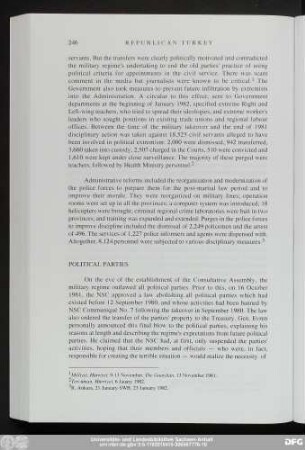
Political Parties
Political - Parties
Political - Parties
Political - Parties
Polarisation and politicisation: the social media strategies of Indian political parties
Women, political parties and social movements in South Asia
On rotatory polarisation in isotropic media.
Elections, parties and political traditions : social foundations of German parties and party systems, 1867 - 1987
The encyclopaedia of the social sciences, Volume 11.. Morbidity-parties, political
We are against! how Polish and French populist parties use social media to convey political narratives
Political Parties
Political - Parties
Political Parties
Political - Parties
Political - Parties
Political - Parties
Polarisation and politicisation: the social media strategies of Indian political parties
Women, political parties and social movements in South Asia
On rotatory polarisation in isotropic media.
Elections, parties and political traditions : social foundations of German parties and party systems, 1867 - 1987
The encyclopaedia of the social sciences, Volume 11.. Morbidity-parties, political
We are against! how Polish and French populist parties use social media to convey political narratives
Political Parties
Political - Parties
Political Parties
Political - Parties
Political - Parties