
Artikel
Leisure Activities as a Driver of Personality Development? A Random-Intercept Cross-lagged Panel Model Across 13 Years in Adulthood
Repeated experiences and activities drive personality development. Leisure activities are among the daily routines that may elicit personality change. Yet despite the important role they play in daily life, little is known about their prospective effects on personality traits and vice versa. The objective of this study was to examine the extent to which within-person changes in leisure activities lead to prospective changes in personality traits, and whether changes in personality elicit prospective changes in leisure activities. We applied random-intercept cross-lagged panel models (RI-CLPM) to four waves of 13-year longitudinal data (2005−2017) from the German Socio-Economic Panel Study (SOEP) for the sample as a whole (N = 55,790) and for three specific age groups (young, middle-aged, and older adults). We examined between-person associations and within-person auto-regressive effects, correlated change and cross-lagged effects for Big Five personality traits (i.e., openness to experience, conscientiousness, extraversion, agreeableness, and neuroticism) with self-reported frequency of leisure activities (i.e., physical activities, socializing, volunteering, political activity, artistic and musical activity, going out) and overall participation in leisure activities. At the between-person level, leisure activities and overall participation were most strongly associated with openness to experience. At the within-person level, we found reciprocal effects of extraversion only with overall participation in leisure activities and socializing. We found unidirectional within-person cross-lagged effects between leisure activities and personality traits and vice versa. Some effects were age-group-specific only. These findings suggest that leisure activities that are associated with certain traits at the between-person level are not necessarily those that trigger change in the respective personality trait. We discuss our findings based on the TESSERA framework for personality development. We conclude that the specificity of an experience or behavior and its corresponding trait is essential for personality development and should be subjected to further research.
- Language
-
Englisch
- Bibliographic citation
-
Journal: Collabra: Psychology ; ISSN: 2474-7394 ; Volume: 7 ; Year: 2021 ; Issue: 1 ; Oakland, CA: University of California Press
- Classification
-
Wirtschaft
- Subject
-
Lifespan development
Leisure activities
Random-intercept cross-lagged panel model
Personality change
- Event
-
Geistige Schöpfung
- (who)
-
Sander, Julia
Schumann, Paul
Richter, David
Specht, Jule
- Event
-
Veröffentlichung
- (who)
-
University of California Press
- (where)
-
Oakland, CA
- (when)
-
2021
- DOI
-
doi:10.1525/collabra.23473
- Handle
- Last update
-
10.03.2025, 11:42 AM CET
Data provider
ZBW - Deutsche Zentralbibliothek für Wirtschaftswissenschaften - Leibniz-Informationszentrum Wirtschaft. If you have any questions about the object, please contact the data provider.
Object type
- Artikel
Associated
- Sander, Julia
- Schumann, Paul
- Richter, David
- Specht, Jule
- University of California Press
Time of origin
- 2021
Other Objects (12)

Leisure Activities as a Driver of Personality Development? A Random-Intercept Cross-lagged Panel Model Across 13 Years in Adulthood

In-vitro-Untersuchung zur Auswirkung des Präparationsdesigns auf die mechanische Stabilität von CAD/CAM-gefertigten Zirkonoxidkronen

Geistreiches Gesang-Buch Oder Alter und Neuer auserlesener Lieder-Schatz, Zur Kirch- und Haus-Andacht frommer Christen ... zusammen getragen

M. Johann Basilii Fleuters, Pastoris zu Kießlingswalde, Gründliche Einleitung ...

39: Jubiläumsausstellung bei Ernst Arnold in Dresden
Neues von Max Klinger
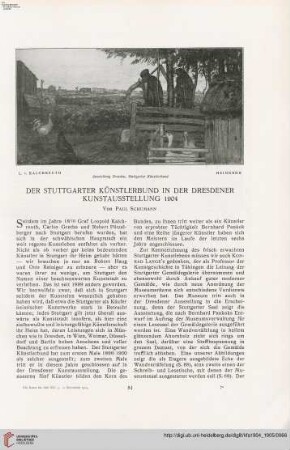
20: Der Stuttgarter Künstlerbund in der Dresdner Kunstausstellung 1904
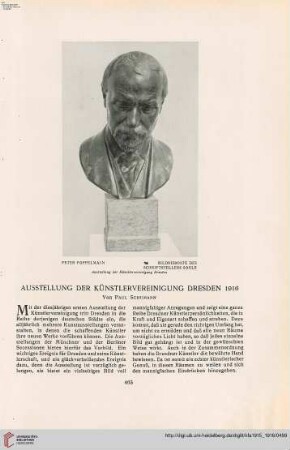
31: Ausstellung der Künstlervereinigung Dresden 1916

X. Tag für Denkmalpflege
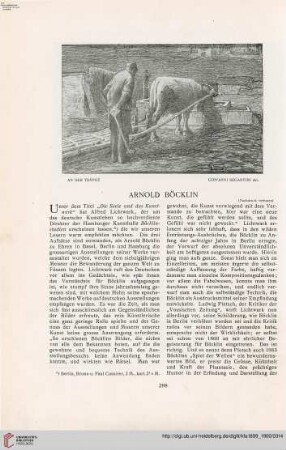
15: Arnold Böcklin
![Die zweite internationale Ausstellung von Aquarellen u.s.w. in Dresden, [1]](https://iiif.deutsche-digitale-bibliothek.de/image/2/90f0aad3-2287-410c-9c16-161639c0b982/full/!306,450/0/default.jpg)
Die zweite internationale Ausstellung von Aquarellen u.s.w. in Dresden, [1]
![Ueber die Erhaltung der Volkstrachten, [1]](https://iiif.deutsche-digitale-bibliothek.de/image/2/3b893695-85cc-412e-a040-61de71110e94/full/!306,450/0/default.jpg)
Ueber die Erhaltung der Volkstrachten, [1]
Leisure Activities as a Driver of Personality Development? A Random-Intercept Cross-lagged Panel Model Across 13 Years in Adulthood
In-vitro-Untersuchung zur Auswirkung des Präparationsdesigns auf die mechanische Stabilität von CAD/CAM-gefertigten Zirkonoxidkronen
Geistreiches Gesang-Buch Oder Alter und Neuer auserlesener Lieder-Schatz, Zur Kirch- und Haus-Andacht frommer Christen ... zusammen getragen
M. Johann Basilii Fleuters, Pastoris zu Kießlingswalde, Gründliche Einleitung ...
39: Jubiläumsausstellung bei Ernst Arnold in Dresden
Neues von Max Klinger
20: Der Stuttgarter Künstlerbund in der Dresdner Kunstausstellung 1904
31: Ausstellung der Künstlervereinigung Dresden 1916
X. Tag für Denkmalpflege
15: Arnold Böcklin
Die zweite internationale Ausstellung von Aquarellen u.s.w. in Dresden, [1]
Ueber die Erhaltung der Volkstrachten, [1]
Leisure Activities as a Driver of Personality Development? A Random-Intercept Cross-lagged Panel Model Across 13 Years in Adulthood
In-vitro-Untersuchung zur Auswirkung des Präparationsdesigns auf die mechanische Stabilität von CAD/CAM-gefertigten Zirkonoxidkronen
Geistreiches Gesang-Buch Oder Alter und Neuer auserlesener Lieder-Schatz, Zur Kirch- und Haus-Andacht frommer Christen ... zusammen getragen
M. Johann Basilii Fleuters, Pastoris zu Kießlingswalde, Gründliche Einleitung ...
39: Jubiläumsausstellung bei Ernst Arnold in Dresden
Neues von Max Klinger
20: Der Stuttgarter Künstlerbund in der Dresdner Kunstausstellung 1904
31: Ausstellung der Künstlervereinigung Dresden 1916
X. Tag für Denkmalpflege
15: Arnold Böcklin
Die zweite internationale Ausstellung von Aquarellen u.s.w. in Dresden, [1]