
Die Städte im spanischen Amerika - Ein zeit-räumliches Entwicklungsmodell der letzten hundert Jahre
Abstract: This paper outlines some of the changes in the spatial distribution of functions, social classes, and types of bulding in Spanish American cities. These changes have occurred in three stages: (1) the pre industrial town, preserving colonial patterns until the end of the 19th century, (2) an early phase of modernization (approx. from1900 to1950) with the establishment of some industries and with a European influence in architecture, (3) the recent urban sprawl resulting from massive immigration from rural areas, which was accompanied by a general metropolization. These clearly separated patterns are graphically demonstrated in fig.1, showing the inter relations between building structures, functions, land values, social status, and population density. The Mexican city of Puebla is taken as a case study. https://www.erdkunde.uni-bonn.de/article/view/1956
- Standort
-
Deutsche Nationalbibliothek Frankfurt am Main
- Umfang
-
Online-Ressource
- Sprache
-
Englisch
- Erschienen in
-
Die Städte im spanischen Amerika - Ein zeit-räumliches Entwicklungsmodell der letzten hundert Jahre ; volume:35 ; number:4 ; year:1981
Erdkunde ; 35, Heft 4 (1981)
- Urheber
- DOI
-
10.3112/erdkunde.1981.04.05
- URN
-
urn:nbn:de:101:1-2410291047340.718812619719
- Rechteinformation
-
Open Access; Der Zugriff auf das Objekt ist unbeschränkt möglich.
- Letzte Aktualisierung
- 14.08.2025, 10:49 MESZ
Datenpartner
Deutsche Nationalbibliothek. Bei Fragen zum Objekt wenden Sie sich bitte an den Datenpartner.
Beteiligte
Ähnliche Objekte (12)

Räumliches Entwicklungsmodell Berlin (REM)
Räumliches Entwicklungsmodell Berlin (REM)
[Räumliches Entwicklungsmodell (REM) Berlin-West. Vorstudien]
[Räumliches Entwicklungsmodell (REM) Berlin-West. Vorstudien]
Räumliches Entwicklungsmodell Berlin (REM). Stand Dezember 1978

Entwicklungsmodell "Landbewirtschaftung"
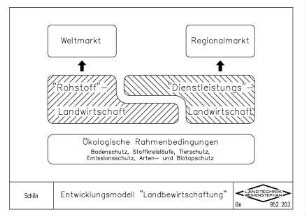
Entwicklungsmodell "Landbewirtschaftung"
China als Entwicklungsmodell
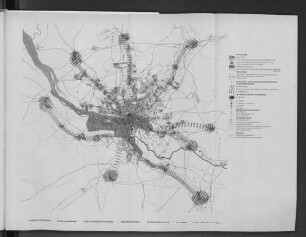
Entwicklungsmodell Hamburg und Umland
CCC Modem "Datenklo" (Entwicklungsmodell)
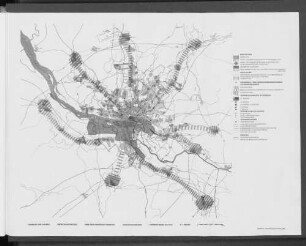
Entwicklungsmodell Hamburg und Umland
Laborbericht 1.1. - 2.- Magmatisches Entwicklungsmodell
Räumliches Entwicklungsmodell Berlin (REM)
Räumliches Entwicklungsmodell Berlin (REM)
[Räumliches Entwicklungsmodell (REM) Berlin-West. Vorstudien]
[Räumliches Entwicklungsmodell (REM) Berlin-West. Vorstudien]
Räumliches Entwicklungsmodell Berlin (REM). Stand Dezember 1978
Entwicklungsmodell "Landbewirtschaftung"
Entwicklungsmodell "Landbewirtschaftung"
China als Entwicklungsmodell
Entwicklungsmodell Hamburg und Umland
CCC Modem "Datenklo" (Entwicklungsmodell)
Entwicklungsmodell Hamburg und Umland
Laborbericht 1.1. - 2.- Magmatisches Entwicklungsmodell
Räumliches Entwicklungsmodell Berlin (REM)
Räumliches Entwicklungsmodell Berlin (REM)
[Räumliches Entwicklungsmodell (REM) Berlin-West. Vorstudien]
[Räumliches Entwicklungsmodell (REM) Berlin-West. Vorstudien]
Räumliches Entwicklungsmodell Berlin (REM). Stand Dezember 1978
Entwicklungsmodell "Landbewirtschaftung"
Entwicklungsmodell "Landbewirtschaftung"
China als Entwicklungsmodell
Entwicklungsmodell Hamburg und Umland
CCC Modem "Datenklo" (Entwicklungsmodell)
Entwicklungsmodell Hamburg und Umland