
Hardware for Deep Learning Acceleration
Deep learning (DL) has proven to be one of the most pivotal components of machine learning given its notable performance in a variety of application domains. Neural networks (NNs) for DL are tailored to specific application domains by varying in their topology and activation nodes. Nevertheless, the major operation type (with the largest computational complexity) is commonly multiply‐accumulate operation irrespective of their topology. Recent trends in DL highlight the evolution of NNs such that they become deeper and larger, and thus their prohibitive computational complexity. To cope with the consequent prohibitive latency for computation, 1) general‐purpose hardware, e.g., central processing units and graphics processing units, has been redesigned, and 2) various DL accelerators have been newly introduced, e.g., neural processing units, and computing‐in‐memory units for deep NN‐based DL, and neuromorphic processors for spiking NN‐based DL. In this review, these accelerators and their pros and cons are overviewed with particular focus on their performance and memory bandwidth.
- Location
-
Deutsche Nationalbibliothek Frankfurt am Main
- Extent
-
Online-Ressource
- Language
-
Englisch
- Bibliographic citation
-
Hardware for Deep Learning Acceleration ; day:21 ; month:03 ; year:2024 ; extent:20
Advanced intelligent systems ; (21.03.2024) (gesamt 20)
- Creator
-
Song, Choongseok
Ye, ChangMin
Sim, Yonguk
Jeong, Doo Seok
- DOI
-
10.1002/aisy.202300762
- URN
-
urn:nbn:de:101:1-2024032213160223807214
- Rights
-
Open Access; Der Zugriff auf das Objekt ist unbeschränkt möglich.
- Last update
- 14.08.2025, 10:53 AM CEST
Data provider
Deutsche Nationalbibliothek. If you have any questions about the object, please contact the data provider.
Associated
- Song, Choongseok
- Ye, ChangMin
- Sim, Yonguk
- Jeong, Doo Seok
Other Objects (12)
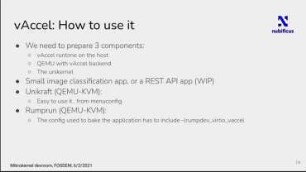
Hardware acceleration for unikernels

MXQuery with hardware acceleration
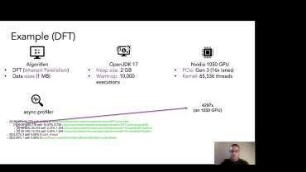
TornadoVM: Hardware Acceleration For Java In Practice
Enabling reconfigurable hardware acceleration for ROS-based robotics applications
Application Level Resource Scheduling for Deep Learning Acceleration on MPSoC
Deep learning reconstruction for lumbar spine MRI acceleration: a prospective study
Hardware Acceleration of Active Noise Control Algorithms
Acceleration of astrophysical simulations with special hardware
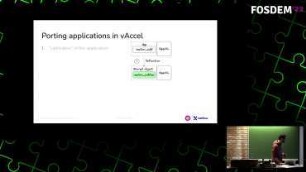
Hardware acceleration for Unikernels: A status update of vAccel
Peak ground acceleration prediction for on-site earthquake early warning with deep learning
Neuromorphic Engineering for Hardware Computational Acceleration and Biomimetic Perception Motion Integration
Fault Tolerance and Hardware Acceleration for Automotive and Aerospace Computing Architectures
Hardware acceleration for unikernels
MXQuery with hardware acceleration
TornadoVM: Hardware Acceleration For Java In Practice
Enabling reconfigurable hardware acceleration for ROS-based robotics applications
Application Level Resource Scheduling for Deep Learning Acceleration on MPSoC
Deep learning reconstruction for lumbar spine MRI acceleration: a prospective study
Hardware Acceleration of Active Noise Control Algorithms
Acceleration of astrophysical simulations with special hardware
Hardware acceleration for Unikernels: A status update of vAccel
Peak ground acceleration prediction for on-site earthquake early warning with deep learning
Neuromorphic Engineering for Hardware Computational Acceleration and Biomimetic Perception Motion Integration
Fault Tolerance and Hardware Acceleration for Automotive and Aerospace Computing Architectures
Hardware acceleration for unikernels
MXQuery with hardware acceleration
TornadoVM: Hardware Acceleration For Java In Practice
Enabling reconfigurable hardware acceleration for ROS-based robotics applications
Application Level Resource Scheduling for Deep Learning Acceleration on MPSoC
Deep learning reconstruction for lumbar spine MRI acceleration: a prospective study
Hardware Acceleration of Active Noise Control Algorithms
Acceleration of astrophysical simulations with special hardware
Hardware acceleration for Unikernels: A status update of vAccel
Peak ground acceleration prediction for on-site earthquake early warning with deep learning
Neuromorphic Engineering for Hardware Computational Acceleration and Biomimetic Perception Motion Integration