
Arbeitspapier
Mandatory Sick Pay Provision: A Labor Market Experiment
Sick-pay is a common provision in labor contracts. It insures workers against a sudden loss of income due to unexpected absences and helps them smooth consumption. Therefore, many governments find sick-pay socially desirable and choose to mandate its provision. But sick-pay is not without its problems. Not only it suffers from moral hazard but more importantly it is subject to a potentially serious adverse selection problem (higher sick-pay attracts sicker workers). In this paper we report results of an experiment which inquires to the extend and the severity of the adverse selection when sick-pay is voluntary versus when it is mandatory. Theoretically, mandating sick-pay may be effective in diminishing adverse selection. However, our data provide clean evidence that counteracting effects are more salient. Mandatory sick pay exacerbates moral hazard problems by changing fairness perceptions and, as a consequence, increases sick pay provision far above the mandatory levels.
- Language
-
Englisch
- Bibliographic citation
-
Series: Discussion Paper Series ; No. 498
- Classification
-
Wirtschaft
- Subject
-
sick pay
sick leave
experiment
gift exchange
Lohnfortzahlung
Pflichtversicherung
Betriebliche Sozialleistungen
Leistungsmotivation
Austauschtheorie
Test
- Event
-
Geistige Schöpfung
- (who)
-
Bauernschuster, Stefan
Duersch, Peter
Oechssler, Jörg
Vadovic, Radovan
- Event
-
Veröffentlichung
- (who)
-
University of Heidelberg, Department of Economics
- (where)
-
Heidelberg
- (when)
-
2010
- DOI
-
doi:10.11588/heidok.00010543
- Handle
- URN
-
urn:nbn:de:bsz:16-opus-105430
- Last update
-
10.03.2025, 11:43 AM CET
Data provider
ZBW - Deutsche Zentralbibliothek für Wirtschaftswissenschaften - Leibniz-Informationszentrum Wirtschaft. If you have any questions about the object, please contact the data provider.
Object type
- Arbeitspapier
Associated
- Bauernschuster, Stefan
- Duersch, Peter
- Oechssler, Jörg
- Vadovic, Radovan
- University of Heidelberg, Department of Economics
Time of origin
- 2010
Other Objects (12)

Mandatory sick pay provision: A labor market experiment
Mandatory Sick Pay Provision: A Labor Market Experiment
Sick Pay Provision in Experimental Labor Markets
Sick Pay Provision in Experimental Labor Markets
Labor market effects of U.S. sick pay mandates
Labor Market Effects of US Sick Pay Mandates
The sick pay trap
The Sick Pay Trap
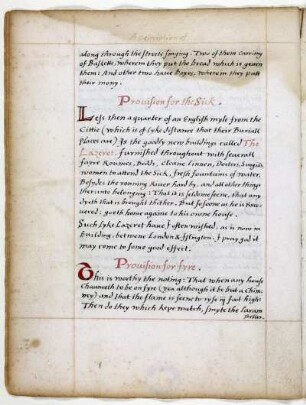
Provision for the sick.
The Value of Sick Pay
A Natural Experiment on Sick Pay Cuts, Sickness Absence, and Labor Costs
A Natural Experiment on Sick Pay Cuts, Sickness Absence, and Labor Costs
Mandatory sick pay provision: A labor market experiment
Mandatory Sick Pay Provision: A Labor Market Experiment
Sick Pay Provision in Experimental Labor Markets
Sick Pay Provision in Experimental Labor Markets
Labor market effects of U.S. sick pay mandates
Labor Market Effects of US Sick Pay Mandates
The sick pay trap
The Sick Pay Trap
Provision for the sick.
The Value of Sick Pay
A Natural Experiment on Sick Pay Cuts, Sickness Absence, and Labor Costs
A Natural Experiment on Sick Pay Cuts, Sickness Absence, and Labor Costs
Mandatory sick pay provision: A labor market experiment
Mandatory Sick Pay Provision: A Labor Market Experiment
Sick Pay Provision in Experimental Labor Markets
Sick Pay Provision in Experimental Labor Markets
Labor market effects of U.S. sick pay mandates
Labor Market Effects of US Sick Pay Mandates
The sick pay trap
The Sick Pay Trap
Provision for the sick.
The Value of Sick Pay
A Natural Experiment on Sick Pay Cuts, Sickness Absence, and Labor Costs