
Arbeitspapier
Using Survey-to-Survey Imputation to Fill Poverty Data Gaps at a Low Cost: Evidence from a Randomized Survey Experiment
Survey data on household consumption are often unavailable or incomparable over time in many low- and middle-income countries. Based on a unique randomized survey experiment implemented in Tanzania, this study offers new and rigorous evidence demonstrating that survey-to-survey imputation can fill consumption data gaps and provide low-cost and reliable poverty estimates. Basic imputation models featuring utility expenditures, together with a modest set of predictors on demographics, employment, household assets and housing, yield accurate predictions. Imputation accuracy is robust to varying survey questionnaire length; the choice of base surveys for estimating the imputation model; different poverty lines; and alternative (quarterly or monthly) CPI deflators. The proposed approach to imputation also performs better than multiple imputation and a range of machine learning techniques. In the case of a target survey with modified (e.g., shortened or aggregated) food or non-food consumption modules, imputation models including food or non-food consumption as predictors do well only if the distributions of the predictors are standardized vis-à-vis the base survey. For best-performing models to reach acceptable levels of accuracy, the minimum-required sample size should be 1,000 for both base and target surveys. The discussion expands on the implications of the findings for the design of future surveys.
- Language
-
Englisch
- Bibliographic citation
-
Series: IZA Discussion Papers ; No. 16792
- Classification
-
Wirtschaft
Statistical Simulation Methods: General
Measurement and Analysis of Poverty
Economic Development: Human Resources; Human Development; Income Distribution; Migration
- Subject
-
consumption
poverty
survey-to-survey imputation
household surveys
Tanzania
- Event
-
Geistige Schöpfung
- (who)
-
Dang, Hai-Anh
Kilic, Talip
Hlasny, Vladimir
Abanokova, Kseniya
Carletto, Calogero
- Event
-
Veröffentlichung
- (who)
-
Institute of Labor Economics (IZA)
- (where)
-
Bonn
- (when)
-
2024
- Last update
- 10.03.2025, 11:45 AM CET
Data provider
ZBW - Deutsche Zentralbibliothek für Wirtschaftswissenschaften - Leibniz-Informationszentrum Wirtschaft. If you have any questions about the object, please contact the data provider.
Object type
- Arbeitspapier
Associated
- Dang, Hai-Anh
- Kilic, Talip
- Hlasny, Vladimir
- Abanokova, Kseniya
- Carletto, Calogero
- Institute of Labor Economics (IZA)
Time of origin
- 2024
Other Objects (12)

Using Survey-to-Survey Imputation to Fill Poverty Data Gaps at a Low Cost: Evidence from a Randomized Survey Experiment
Challenges in predicting poverty trends using survey to survey imputation: Experiences from Malawi
When to Fill Responsibility Gaps: A Proposal
Hybrid multiple imputation in a large scale complex survey
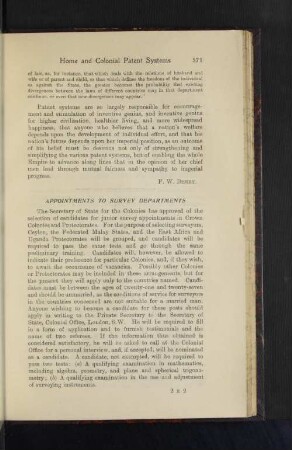
Appointments to Survey Departments
Are Factorial Survey Experiments Prone to Survey Mode Effects?
BIBB Supplemental Task Survey to the Employment Survey 2012
Can survey-based information help to assess investment gaps in the EU?
Multiple Imputation in the Austrian Household Survey on Housing Wealth
Agreeing to Disagree: A Survey
Quantifying credit gaps using survey data on discouraged borrowers
Starting to fill the gaps of the Selinus geophysical map
Using Survey-to-Survey Imputation to Fill Poverty Data Gaps at a Low Cost: Evidence from a Randomized Survey Experiment
Challenges in predicting poverty trends using survey to survey imputation: Experiences from Malawi
When to Fill Responsibility Gaps: A Proposal
Hybrid multiple imputation in a large scale complex survey
Appointments to Survey Departments
Are Factorial Survey Experiments Prone to Survey Mode Effects?
BIBB Supplemental Task Survey to the Employment Survey 2012
Can survey-based information help to assess investment gaps in the EU?
Multiple Imputation in the Austrian Household Survey on Housing Wealth
Agreeing to Disagree: A Survey
Quantifying credit gaps using survey data on discouraged borrowers
Starting to fill the gaps of the Selinus geophysical map
Using Survey-to-Survey Imputation to Fill Poverty Data Gaps at a Low Cost: Evidence from a Randomized Survey Experiment
Challenges in predicting poverty trends using survey to survey imputation: Experiences from Malawi
When to Fill Responsibility Gaps: A Proposal
Hybrid multiple imputation in a large scale complex survey
Appointments to Survey Departments
Are Factorial Survey Experiments Prone to Survey Mode Effects?
BIBB Supplemental Task Survey to the Employment Survey 2012
Can survey-based information help to assess investment gaps in the EU?
Multiple Imputation in the Austrian Household Survey on Housing Wealth
Agreeing to Disagree: A Survey
Quantifying credit gaps using survey data on discouraged borrowers