
Arbeitspapier
The Brazilian economy from Cardoso to Lula: An interim view
This chapter on the Brazilian economy after 1994 is of a somewhat different nature compared to those on the economy in earlier periods. It is more speculative than its predecessors and based on a more restricted range of bibliographical material, as there is less consolidated research work on the period. It is to stress the obvious that the essay is inevitably marred to a certain degree by the lack of a sufficiently long time perspective. But it was thought that the benefits of providing a provisional account of the more recent economic developments in Brazil far outstripped the costs. The Brazilian economic history from 1995 to 2004 was still dominated by efforts to stabilise the economy. The essay is structured around an analysis of the eventful macroeconomic policies followed during the period. Other aspects are also considered, but often only to allow a clearer picture of the evolution of macroeconomic policies and the constraints they had to face. At first, the main economic policy objective was to consolidate the results of the Real Plan and to make sure that the long high inflation experience was really over. But soon the need to put public accounts under control and to make a sizable external adjustment would become the main challenges to be faced. A major balance of payments crisis in early 1999 imposed much overdue drastic changes in economic policy. Further disturbances occurred in 2002, the last year of Cardoso’s second term, as financial markets reflected fears that economic policy could be reversed with the likely victory of the opposition presidential candidate, Luiz Inácio Lula da Silva. But, somewhat surprisingly, the new government opted for policies that by and large represented a continuation of the orthodox economic policies of its predecessor. In contrast with the previous fifteen years there was success, in spite of many difficulties. Advance in the stabilisation front required reforms and institutional building efforts that brought very important changes and a sound foundation for future economic expansion. But effective growth performance over the period continued to be mediocre: between 1994 and 2004 per capita GDP (gross domestic product) increased an average of only 0.9 percent yearly. Together with structural fiscal difficulties, low economic growth imposed strict constraints on policies seeking to alleviate the country’s severe social imbalances
- Language
-
Englisch
- Bibliographic citation
-
Series: Texto para discussão ; No. 504
- Classification
-
Wirtschaft
Economic History: Macroeconomics and Monetary Economics; Industrial Structure; Growth; Fluctuations: Latin America; Caribbean
Comparative or Joint Analysis of Fiscal and Monetary Policy; Stabilization; Treasury Policy
- Subject
-
economic history
stabilization
Brazil
Wirtschaftspolitik
Brasilien
- Event
-
Geistige Schöpfung
- (who)
-
de Paiva Abreu, Marcelo
Werneck, Rogério L. F.
- Event
-
Veröffentlichung
- (who)
-
Pontifícia Universidade Católica do Rio de Janeiro (PUC-Rio), Departamento de Economia
- (where)
-
Rio de Janeiro
- (when)
-
2005
- Handle
- Last update
- 10.03.2025, 11:41 AM CET
Data provider
ZBW - Deutsche Zentralbibliothek für Wirtschaftswissenschaften - Leibniz-Informationszentrum Wirtschaft. If you have any questions about the object, please contact the data provider.
Object type
- Arbeitspapier
Associated
- de Paiva Abreu, Marcelo
- Werneck, Rogério L. F.
- Pontifícia Universidade Católica do Rio de Janeiro (PUC-Rio), Departamento de Economia
Time of origin
- 2005
Other Objects (12)

The Brazilian Economy after Lula: What to Expect?
Making Citizens: Brazilian Social Policy from Getúlio to Lula
Making Citizens: Brazilian Social Policy from Getúlio to Lula
Brasiliens soziale Schuld: Lulas Dilemma, Lulas Lösung
Brasiliens soziale Schuld: Lulas Dilemma, Lulas Lösung
Lula’s Brazil and Beyond: An Introduction
Lula’s Power is Brazil’s Arm

Celi Bitshou. Lula
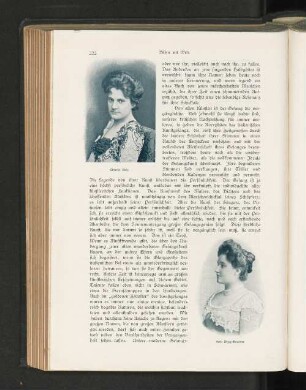
Lula Mysz-Gmeiner
Lula, Silvija * 05.02.1923
Lula hebt ab
Mysz-Gmeiner, Lula
The Brazilian Economy after Lula: What to Expect?
Making Citizens: Brazilian Social Policy from Getúlio to Lula
Making Citizens: Brazilian Social Policy from Getúlio to Lula
Brasiliens soziale Schuld: Lulas Dilemma, Lulas Lösung
Brasiliens soziale Schuld: Lulas Dilemma, Lulas Lösung
Lula’s Brazil and Beyond: An Introduction
Lula’s Power is Brazil’s Arm
Celi Bitshou. Lula
Lula Mysz-Gmeiner
Lula, Silvija * 05.02.1923
Lula hebt ab
Mysz-Gmeiner, Lula
The Brazilian Economy after Lula: What to Expect?
Making Citizens: Brazilian Social Policy from Getúlio to Lula
Making Citizens: Brazilian Social Policy from Getúlio to Lula
Brasiliens soziale Schuld: Lulas Dilemma, Lulas Lösung
Brasiliens soziale Schuld: Lulas Dilemma, Lulas Lösung
Lula’s Brazil and Beyond: An Introduction
Lula’s Power is Brazil’s Arm
Celi Bitshou. Lula
Lula Mysz-Gmeiner
Lula, Silvija * 05.02.1923
Lula hebt ab