
Internal tides off the Amazon shelf during two contrasted seasons: interactions with background circulation and SSH imprints
Abstract 1/36 ∘) explicitly forced by tide, aims to better characterize how the ITs vary between two contrasted seasons. During the season from March to July (MAMJJ) the currents and mesoscale eddies are weak while the pycnocline is shallower and stronger. From August to December (ASOND) mean currents and mesoscale eddies are strong, and the pycnocline is deeper and weaker than in MAMJJ. For both seasons, semi-diurnal M2 ITs are generated on the shelf break mainly between the 100 and 1000 m isobath in the model. South of 2∘ N, the conversion from barotropic to baroclinic tide is more efficient in MAMJJ than in ASOND. Local dissipation of the coherent M2 at the generation sites is higher in MAMJJ (30 %) than in ASOND (22 %), because higher modes are favourably generated (modes 2 and 3), making the internal wave packet more dispersive. The remaining fraction (70 %–80 %) propagates away from the generation sites and mainly dissipates locally every ∼ ∘ N during ASOND. There is no intensified dissipation of the coherent M2 that could explain the disappearance of the coherent flux. In fact, the flux at this location becomes more incoherent because of strong interaction with the currents. This has been shown in the paper using 25 h mean snapshots of the baroclinic flux that shows branching and stronger eastward deviation of the IT when interacting with mesoscale eddies and stratification during ASOND. Finally, we evaluated sea surface height (SSH) frequency and wavenumber spectra for subtidal (f < 1/28 h- 1 1/28 h- 1 < f < 1/11 h- 1 f > 1/11 h- 1) frequencies. Tidal frequencies explain most of the SSH variability for wavelengths between 250 and 70 km. Below 70 km, the SSH is mainly incoherent and supertidal. The length scale at which the SSH becomes dominated by unbalanced (non-geostrophic) IT was estimated to be around 250 km. Our results highlight the complexity of correctly predicting IT SSH in order to better observe mesoscale and sub-mesoscale eddies from existing and upcoming altimetric missions, notably the Surface Water Ocean Topography (SWOT) mission.
- Standort
-
Deutsche Nationalbibliothek Frankfurt am Main
- Umfang
-
Online-Ressource
- Sprache
-
Englisch
- Erschienen in
-
Internal tides off the Amazon shelf during two contrasted seasons: interactions with background circulation and SSH imprints ; volume:18 ; number:6 ; year:2022 ; pages:1591-1618 ; extent:28
Ocean science ; 18, Heft 6 (2022), 1591-1618 (gesamt 28)
- Urheber
-
Tchilibou, Michel
Koch-Larrouy, Ariane
Barbot, Simon
Lyard, Florent
Morel, Yves
Jouanno, Julien
Morrow, Rosemary
- DOI
-
10.5194/os-18-1591-2022
- URN
-
urn:nbn:de:101:1-2022112404294592263638
- Rechteinformation
-
Open Access; Der Zugriff auf das Objekt ist unbeschränkt möglich.
- Letzte Aktualisierung
-
15.08.2025, 07:33 MESZ
Datenpartner
Deutsche Nationalbibliothek. Bei Fragen zum Objekt wenden Sie sich bitte an den Datenpartner.
Beteiligte
- Tchilibou, Michel
- Koch-Larrouy, Ariane
- Barbot, Simon
- Lyard, Florent
- Morel, Yves
- Jouanno, Julien
- Morrow, Rosemary
Ähnliche Objekte (12)

Internal tides off the Amazon shelf during two contrasted seasons: Interactions with background circulation and SSH imprints
Internal tides in the Solomon Sea in contrasted ENSO conditions
Internal tides in the Solomon Sea in contrasted ENSO conditions

SSH
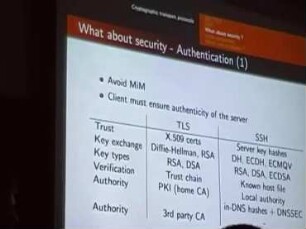
SSH libraries: SSH vs TLS; libssh

s/sh

Financial Powers Contrasted.

SSH - kurz & gut
SSH : kurz & gut
ssh - Secure Shell
Artifizielle humane Imprints

Tides
Internal tides off the Amazon shelf during two contrasted seasons: Interactions with background circulation and SSH imprints
Internal tides in the Solomon Sea in contrasted ENSO conditions
Internal tides in the Solomon Sea in contrasted ENSO conditions
SSH
SSH libraries: SSH vs TLS; libssh
s/sh
Financial Powers Contrasted.
SSH - kurz & gut
SSH : kurz & gut
ssh - Secure Shell
Artifizielle humane Imprints
Tides
Internal tides off the Amazon shelf during two contrasted seasons: Interactions with background circulation and SSH imprints
Internal tides in the Solomon Sea in contrasted ENSO conditions
Internal tides in the Solomon Sea in contrasted ENSO conditions
SSH
SSH libraries: SSH vs TLS; libssh
s/sh
Financial Powers Contrasted.
SSH - kurz & gut
SSH : kurz & gut
ssh - Secure Shell
Artifizielle humane Imprints